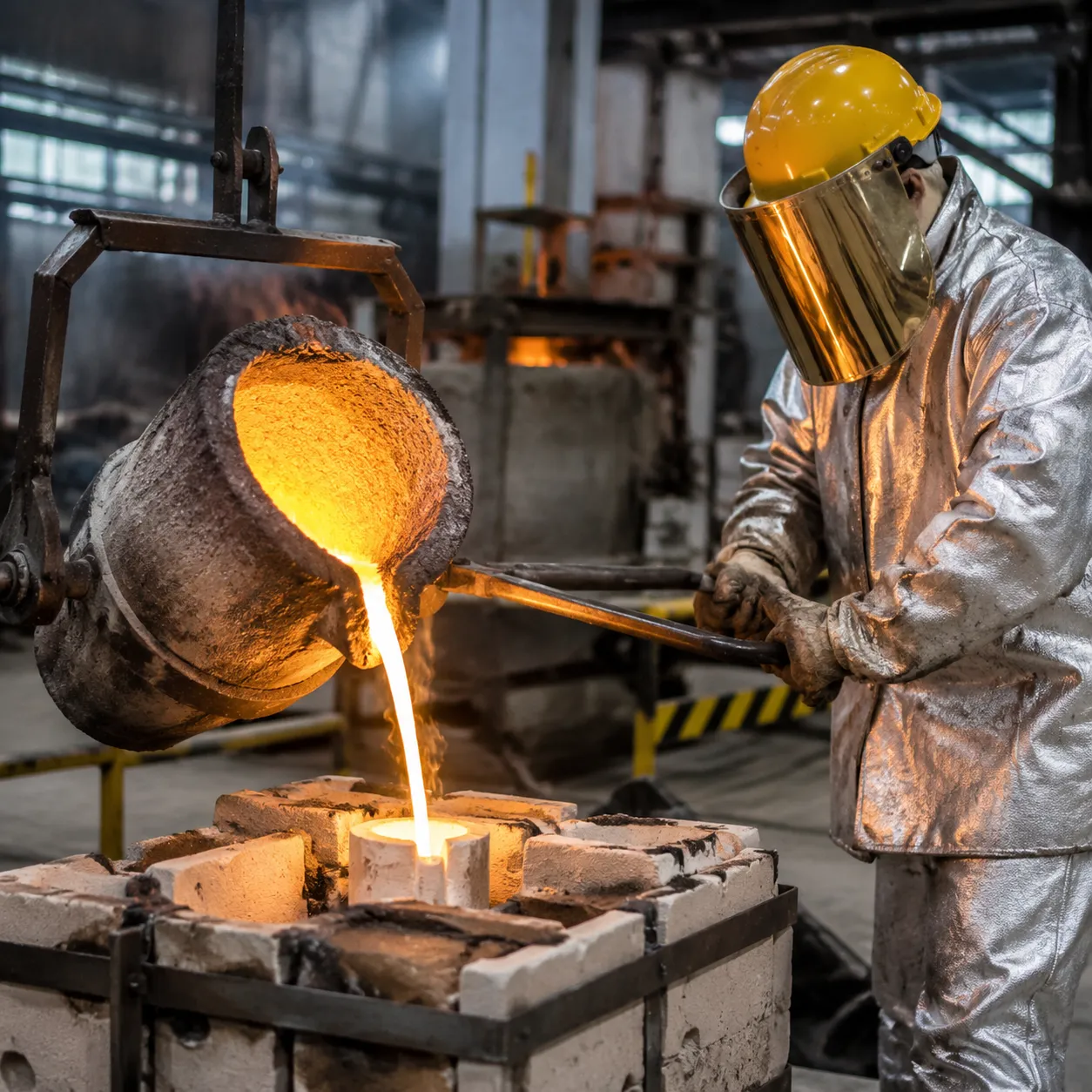
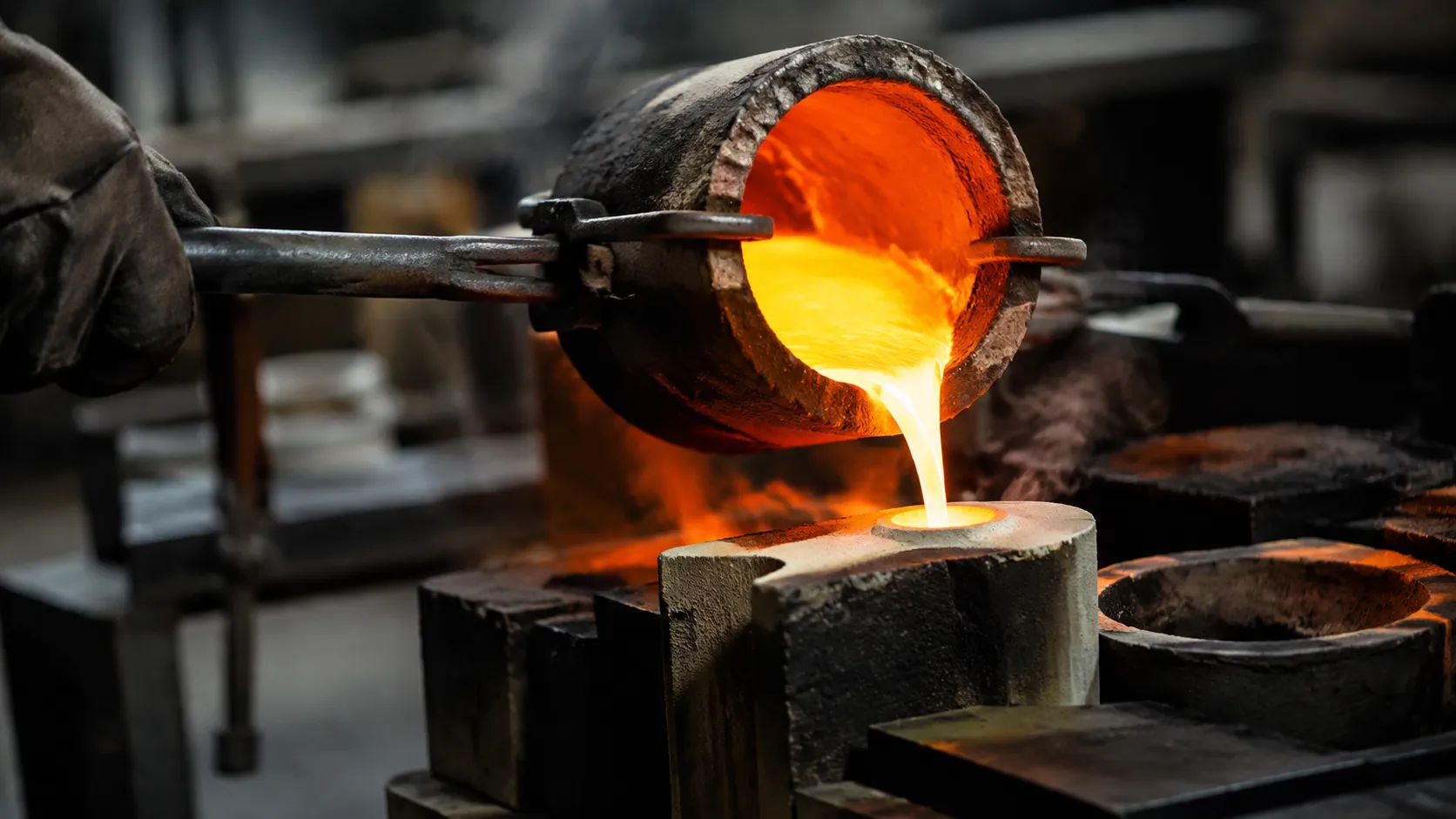
Lost wax brass casting - also known as brass investment casting - produces high-precision metal components with complex geometries, superior surface finishes, and minimal machining requirements. The lost wax casting process uses a disposable wax pattern, ceramic shell investment, and a molten brass pour to form net-shape or near-net-shape parts for plumbing, marine, industrial, and decorative applications. This guide covers process steps, brass alloy selection, comparisons with sand casting and brass die casting, and supplier evaluation checkpoints.
What Is Lost Wax Brass Casting?
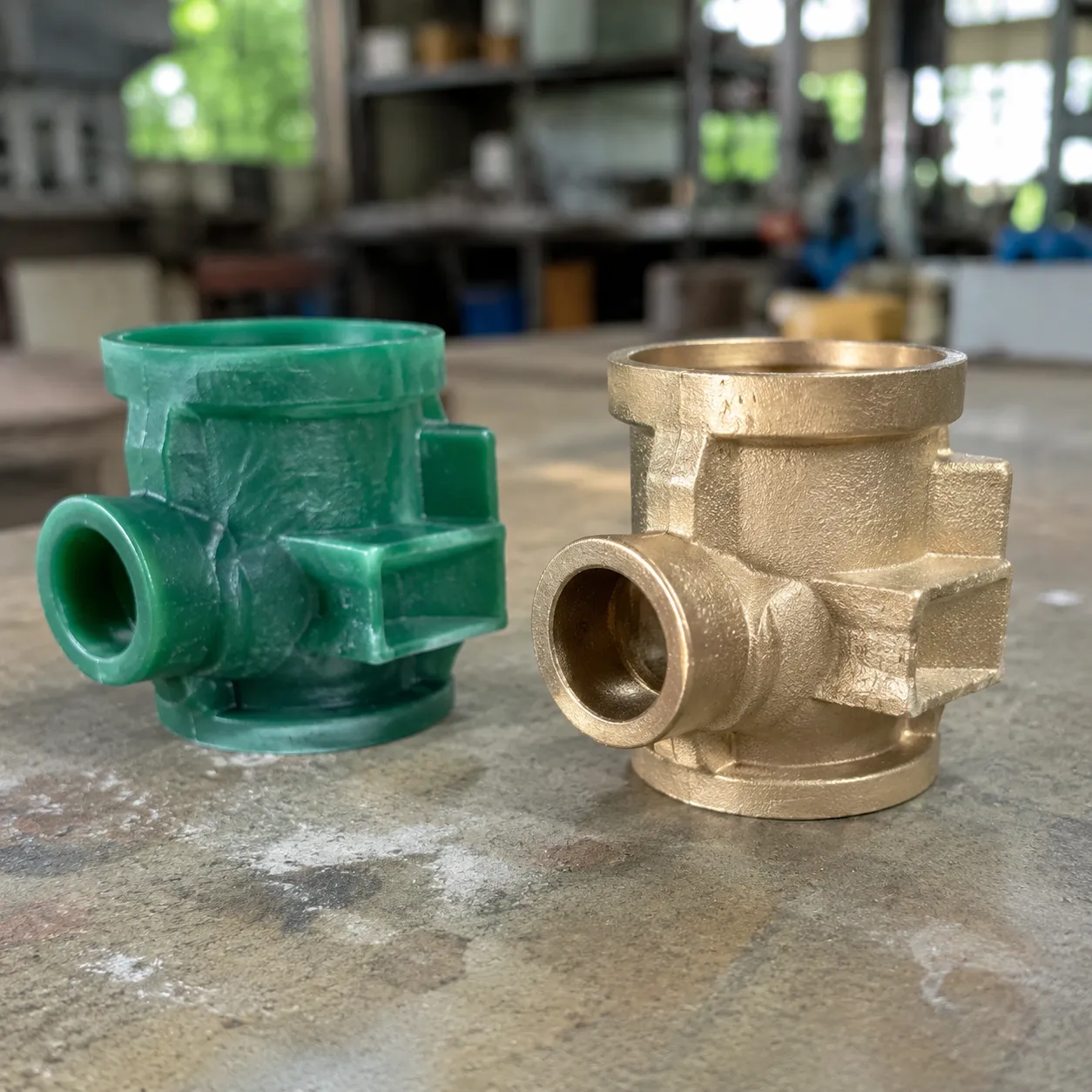
Lost wax brass casting is a high-precision manufacturing method that produces metal components by creating a wax pattern, encapsulating it in a ceramic shell, and melting the wax away to form a mold cavity. Molten brass is then poured into the cavity to form intricate, highly detailed metal parts.[3] As a leading provider of investment casting and precision CNC machining services, we utilize this method to manufacture net-shape and near-net-shape components that meet strict dimensional tolerances for global industrial markets.
Understanding the Investment Casting Principle
The lost wax process - traditionally known as investment casting or cire perdue - relies on a disposable wax pattern to create seamless metal parts without flash lines or parting lines.[4]
- Pattern Creation: Injecting wax into a precision master die to replicate the final part geometry.
- Tree Assembly: Attaching multiple wax patterns to a central sprue system to optimize output per batch.
- Shell Building: Repeatedly dipping the wax assembly into ceramic slurry and refractory grains to build a rigid investment mold.
- Burnout Process: Heating the ceramic shell in a furnace to completely melt and vaporize the wax, leaving a pristine hollow cavity.
- Pouring & Shell Removal: Inducting molten brass into the preheated shell, followed by mechanical shell knockout after cooling.
Brief History and Evolution of Brass Investment Casting
While lost wax casting originated thousands of years ago for artistic sculptures and jewelry, modern industrial engineering transformed it into a reliable precision casting process. Historical manual wax carving has evolved into automated wax injection tooling and 3D-printed patterns. Today, combining advanced refractory ceramic materials with induction melting technology enables mass production of brass, bronze, and copper castings with superior repeatability and microscopic detail capture.
Why Brass Is Ideal for Lost Wax Casting
Brass possesses exceptional metallurgical properties that make it exceptionally well-suited for investment casting applications:
- High Fluidity: Low viscosity when molten allows brass to flow effortlessly into razor-thin walls and intricate mold features.
- Corrosion Resistance: High resistance to moisture and industrial chemicals makes cast brass ideal for fluid handling and marine components.
- Moderate Melting Temperatures: Requires lower energy inputs compared to ferrous alloys, significantly extending tool life and reducing processing costs.
- Dimensional Stability & Machinability: Minimizes thermal shrinkage during solidification while offering excellent secondary precision CNC machining characteristics.
Advantages of Lost Wax Brass Casting for Complex Components
When manufacturing complex copper-alloy hardware, lost wax brass casting provides unmatched dimensional accuracy and design freedom. As a dedicated provider of investment casting and precision CNC machining, we leverage this process to deliver high-performance parts with minimal post-processing.
High Precision and Intricate Detail Capability
The lost wax process captures extreme design detail directly from the pattern mold:
- Tight Tolerances: Typically achieves linear tolerances on the order of ±0.005 inches per inch for many features (capability varies by geometry and alloy).[1]
- Fine Details: Reproduces sharp edges, thin walls, fine lettering, and micro-textures accurately.
- No Draft Angles Required: Casts vertical walls and complex internal features without draft concessions.
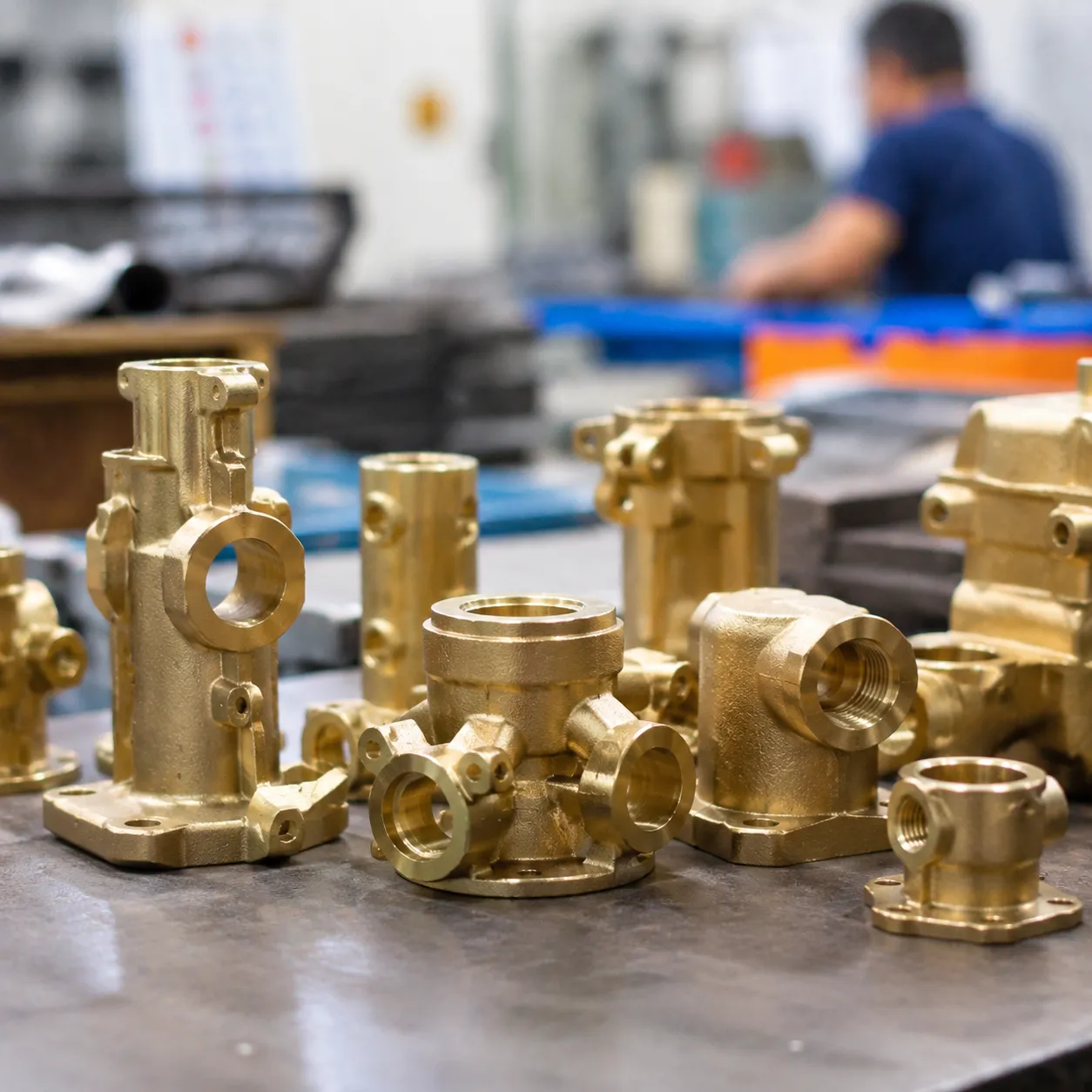
Superior Surface Finish and Minimal Machining Requirements
Using a ceramic shell investment yields exceptionally smooth surface finishes straight out of the burnout process:
- Surface Roughness: As-cast finishes commonly fall between about 63 RMS and 125 RMS, within a broader investment-casting process window often cited around 60-200 RMS.[2]
- Reduced Scrap: Near-net-shape manufacturing cuts raw material waste significantly.
- Lower Unit Costs: Eliminates multi-axis CNC roughing steps, saving production time and tooling wear.
We streamline production schedules by delivering near-net-shape brass, bronze, and copper castings that require little to no secondary surface grinding.
Versatility in Complex Geometries and Custom Designs
Investment casting handles internal cavities and fluid channels that traditional machining cannot replicate:
- Hollow Passages: Soluble wax cores easily create complex internal fluid paths.
- Multi-Part Consolidation: Combines multi-piece assemblies into a single cast component to remove joint failure points.
- Custom Applications: Ideal for demanding geometries, such as high-efficiency pump impeller castings and customized valve housings.
Cost-Efficiency for Small to Medium Production Runs
Lost wax casting bridges the gap between low-volume sand casting and high-volume die casting:
| Advantage Factor | Lost Wax Brass Casting | Traditional Sand Casting | Brass Die Casting |
|---|---|---|---|
| Tooling Investment | Moderate | Low | Very High |
| Surface Smoothness | Excellent (63-125 RMS) | Rough (300-500 RMS) | Good (100-200 RMS) |
| Geometric Complexity | Very High (Internal voids) | Moderate | Limited (Draft required) |
| Optimal Production Volume | 50 - 10,000 units | 1 - 500 units | 10,000+ units |
| Machining Needed | Minimal to None | Extensive | Moderate |
By combining quick-turn wax patterns with scalable investment molds, we optimize unit costs for custom components across both small prototype batches and medium-volume production runs.
Step-by-Step Lost Wax Brass Casting Process
We turn complex design concepts into durable, high-precision components using a refined lost wax brass casting workflow.
Creating the Wax Pattern and Master Mold
Our precision casting workflow starts with an exact tool design to create a master metal mold. We inject wax into this mold to produce high-precision wax patterns that mirror the final brass part.
- Pattern Injection: High-grade wax is injected under pressure into the master die.
- Shrinkage Allowance: Tooling dimensions account for both wax and metal cooling shrinkage.
- Inspection: Each wax pattern is visually and dimensionally checked before moving forward.
Assembling the Wax Tree and Ceramic Shell Investment
To prepare for mass production, individual wax patterns are joined together onto a central wax sprue.
- Spruing: Technicians attach multiple wax patterns to a central runner system, forming a tree-like assembly that directs fluid metal flow.
- Slurry Dipping: We submerge the wax tree into a liquid ceramic slurry.
- Stucco Coating: Fine refractory sand is applied over the wet slurry layer.
- Layer Building: The dipping and drying cycle repeats 5 to 8 times to construct a robust ceramic shell around the wax pattern, creating the final investment mold.
Dewaxing Burnout and Molten Brass Pouring
Once the ceramic shell hardens completely, we remove the wax core and prepare the cavity for pouring. Our optimized investment casting process guarantees maximum structural integrity during high-temperature operations.
- Dewaxing (Cire Perdue): High-pressure steam inside an autoclave melts away the wax pattern, leaving an empty ceramic cavity.
- Burnout Process: The shell is fired in a furnace at elevated temperatures to burn off residual wax and sinter the ceramic material.
- Pouring: We preheat the ceramic shell to prevent thermal shock and pour molten metal brass directly into the shell cavity under controlled atmospheric conditions.
Shell Knockout, Cleaning, and Surface Finishing
After the molten brass cools and solidifies, the component undergoes final recovery and finishing steps.
| Step | Action | Objective |
|---|---|---|
| Knockout | Mechanical vibration or high-pressure water jetting | Break away the exterior ceramic shell |
| Cut-Off | High-speed abrasive saws | Detach cast brass parts from the central sprue tree |
| Grinding & Blasting | Belt grinding and bead/shot blasting | Remove gate stubs and equalize surface texture |
| Surface Treatment | Polishing, electroplating, or applying a patina finish | Enhance appearance, corrosion resistance, or decorative appeal.[5] |
Brass Alloys Used in Lost Wax Brass Casting
We produce high-precision copper alloy castings using the lost wax process to match exact engineering specifications.[6]
Yellow Brass Alloys and Their Properties
Yellow brass is the industry standard for general-purpose investment casting, recognized for its excellent fluidity and cost-efficiency.
- High Castability: Flows smoothly into complex ceramic shell details without forming cold shuts.
- Superior Machinability: Easy to post-process with secondary precision CNC machining.
- Corrosion Resistance: Performs reliably in indoor and mild atmospheric environments.
- Aesthetic Appeal: Delivers a bright, gold-like appearance that easily accepts custom polish or patina finishes.
High-Strength Silicon Brass and Special Alloys
When applications demand superior durability, silicon brass and specialized bronze alloys provide elevated mechanical performance.
- High Tensile Strength: Yields load-bearing properties comparable to standard structural steels.
- Pressure Tightness: Forms dense, non-porous cast structures ideal for fluid handling systems.
- Wear & Impact Resistance: Resists galling and friction in mechanical assemblies.
Selecting the Right Alloy for Mechanical Performance
| Alloy Category | Core Strengths | Primary Applications |
|---|---|---|
| Yellow Brass | High fluidity, excellent polish, easy machining | Architectural hardware, plumbing trim, decorative components |
| Silicon Brass | Exceptional strength, wear resistance, pressure tight | Valve bodies, pump impellers, heavy-duty mechanical gears |
| Red Brass / Bronze | High ductility, superior corrosion resistance | Marine fittings, electrical connectors, underground plumbing; related bronze investment casting programs |
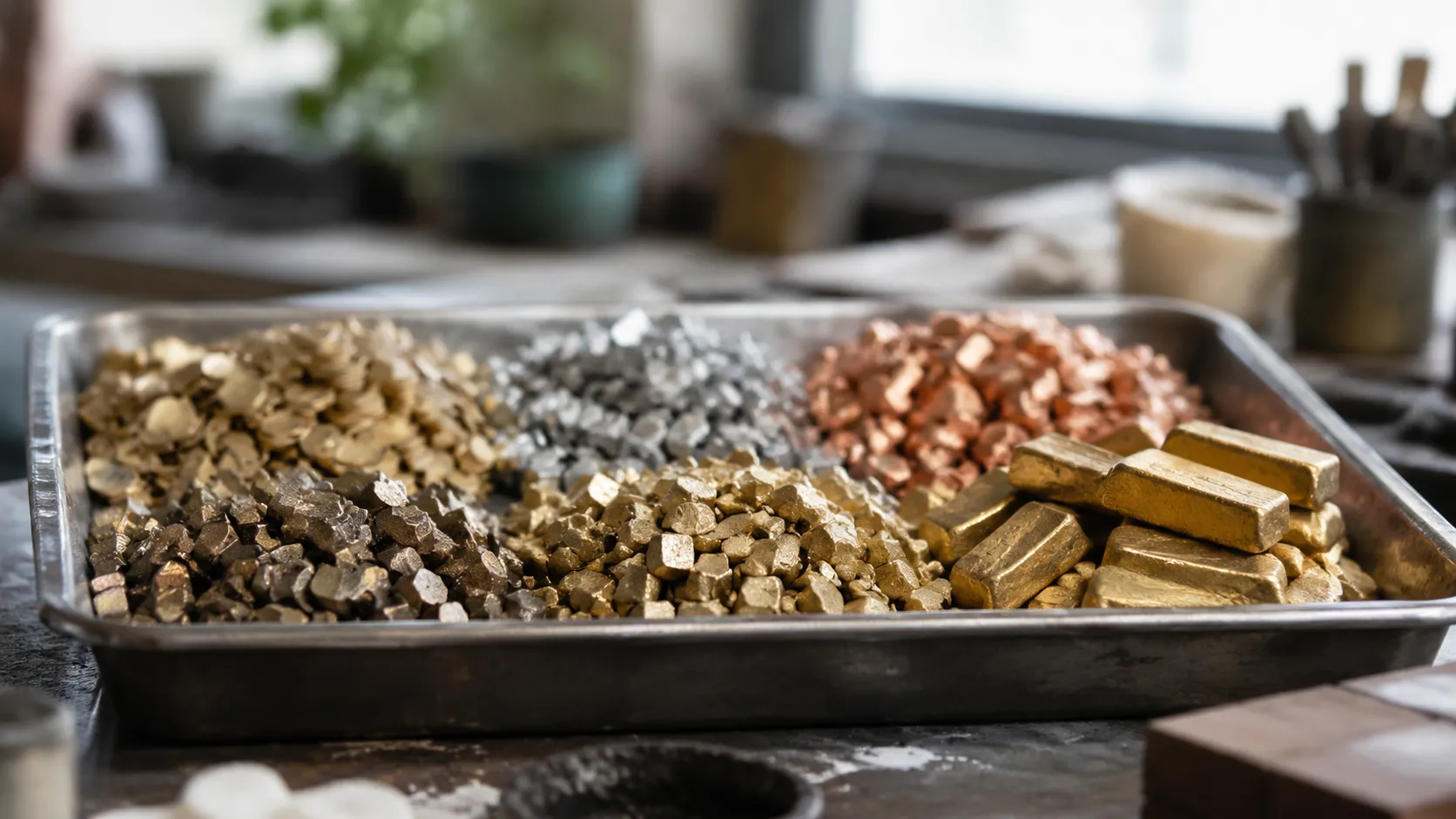
Lost Wax Brass Casting Applications by Industry
Due to its fluid flow during pouring, natural corrosion resistance, and striking surface appearance, lost wax brass casting powers a wide range of critical global industries. As a provider of investment casting and precision CNC machining services, we manufacture durable brass components engineered to meet exact dimensional tolerances.
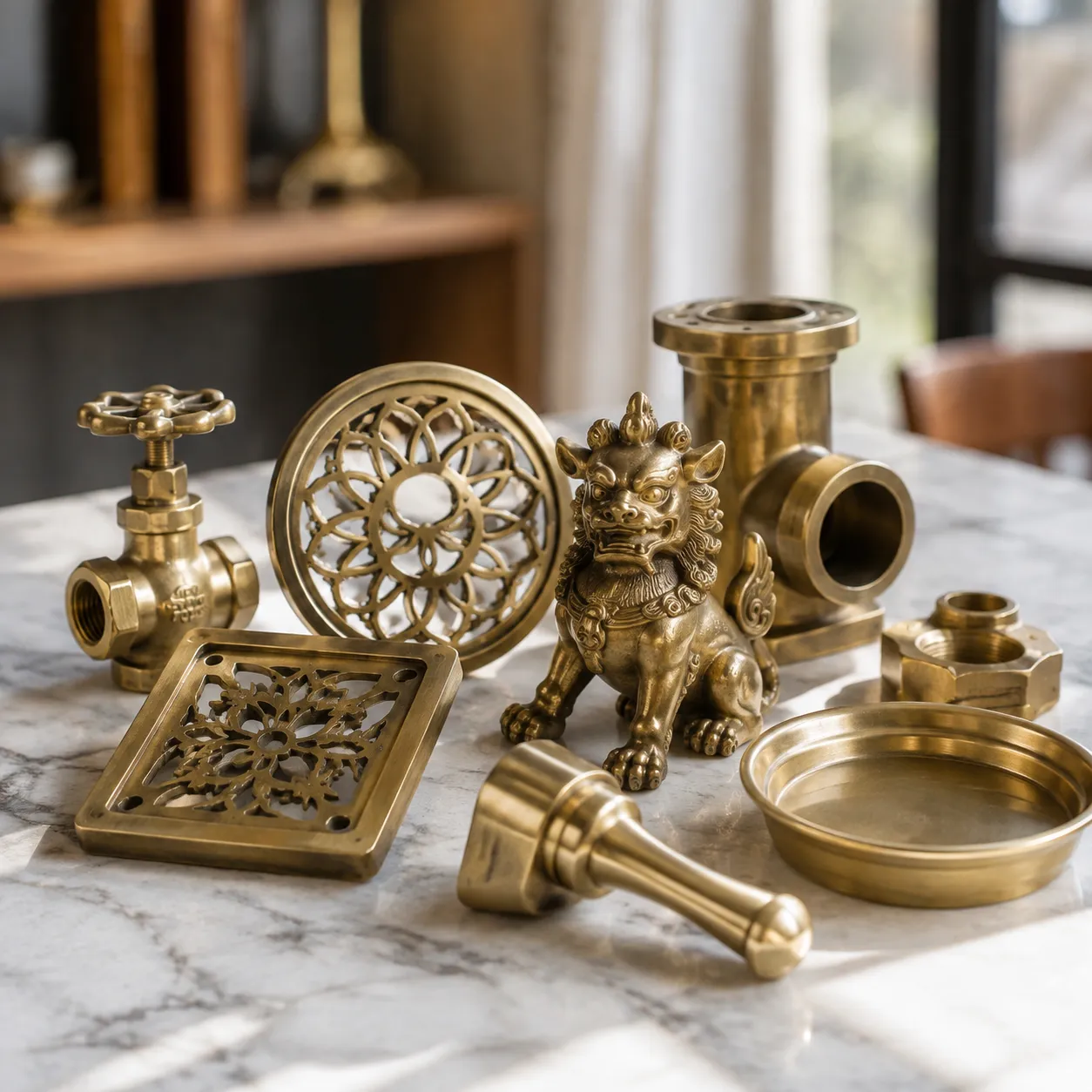
Artistic Sculptures, Decorative Hardware, and Jewelry
The lost wax process - historically known as cire perdue - remains the premier manufacturing choice for fine art and high-end decorative hardware.
- Detailed Sculptures & Jewelry: Captures fine textures, sharp reliefs, and smooth contours for custom artistic works and jewelry designs.
- Architectural Hardware: Produces heavy-duty door handles, cabinet pulls, and decorative fixtures that readily accept a rich patina finish.
Plumbing Fittings, Valves, and Marine Components
Brass naturally resists corrosion from freshwater, steam, and saline solutions, making precision casting indispensable for fluid control systems.
- Fluid Handling: Creates leak-tight valve bodies, pipe connectors, and manifold fittings designed for high-pressure operations.
- Marine Hardware: Supplies ocean-grade impellers, cleats, hinges, and marine fittings built to survive harsh saltwater environments.
Precision Industrial Machinery and Automotive Parts
We combine modern investment casting with secondary finishing to deliver precision components built for long service lives.
- Machinery Components: Casts high-wear bushings, spur gears, pump housings, and mounting brackets.
- Automotive Assemblies: Delivers custom bushings, fuel fittings, and specialized engine hardware, offering a perfect complement to custom automotive tuning parts for high-performance builds.
Lost Wax Brass Casting vs. Alternative Manufacturing Methods
While lost wax brass casting excels in creating complex, high-precision parts with minimal post-machining, evaluating alternative methods highlights where it delivers maximum value.
Lost Wax Casting vs. Sand Casting
Sand casting relies on compacted sand molds, making it ideal for simple, heavy structural parts. However, lost wax brass casting provides far superior accuracy and fine detail.
- Dimensional Precision: Investment casting delivers tight tolerances down to ±0.005 inches, while sand casting results in looser tolerances requiring extensive secondary CNC machining.[1]
- Surface Quality: The smooth ceramic shell yields a refined surface finish, bypassing the heavy grinding and polishing associated with sand molds.
- Design Complexity: Lost wax casting supports thin walls, fine lettering, and intricate internal cavities that sand molds cannot capture.
Lost Wax Casting vs. Brass Die Casting
Brass die casting forces molten metal under extreme pressure into reusable steel dies.
| Feature | Lost Wax Brass Casting | Brass Die Casting |
|---|---|---|
| Initial Tooling Cost | Moderate to low | High (hardened steel dies) |
| Minimum Run Size | Suitable for low, medium, or high runs | Requires high-volume production |
| Internal Geometry | Unlimited (wax melts out) | Limited (part must eject cleanly) |
| Wall Thickness | Uniform thin-wall capability | Subject to shrinkage porosity |
Combining 3D Printing with Traditional Lost Wax Casting
We blend traditional metal casting craftsmanship with additive manufacturing by integrating 3D printing into the lost wax process.
Instead of machining a permanent metal die to create wax patterns, we directly 3D-print wax or specialized resin patterns.
- Eliminating Tooling Costs: Perfect for one-off prototypes, custom architectural elements, or low-volume runs.
- Rapid Iteration: Allows design modifications in CAD software without scrapping physical tooling.
- Accelerated Lead Times: Cuts prototype production times down from weeks to just a few days.
This hybrid process speeds up development cycles across various industries, from intricate valve components to specialized automotive after-market investment castings.
How to Choose the Right Lost Wax Brass Casting Supplier
Selecting a dependable manufacturer for lost wax brass casting requires a clear evaluation of quality controls, technical capability, and production economics. Working with an experienced investment casting provider ensures every component meets your exact dimensional tolerances and material requirements.
Evaluating Quality Control Standards and Certifications
- Material Verification: Confirm the supplier uses optical emission spectrometers to guarantee accurate brass alloy chemistry.
- Process Compliance: Look for suppliers holding valid international quality certifications to ensure consistent batch-to-batch repeatability.
- In-House Inspection: Ensure the foundry operates complete testing facilities for non-destructive testing, hydrostatic testing, and coordinate measuring machine (CMM) dimensional checks.
Assessing Prototyping and Customization Capabilities
- 3D-Printed Patterns: Fast-track sample approval by using 3D-printed wax or resin patterns, skipping expensive initial tooling.
- Design for Manufacturability (DFM): In-house engineering teams optimize wall thickness, gating, and spruing to eliminate porosity and casting defects.
- Secondary Machining: Choose a partner offering integrated precision CNC machining to deliver fully finished, ready-to-assemble brass parts.
Understanding Cost Drivers, Lead Times, and Order Quantities
Balancing upfront investments with long-term unit costs requires understanding the primary operational variables in precision casting.
| Variable | Considerations | Operational Impact |
|---|---|---|
| Tooling & Molds | Custom aluminum master dies vs. direct 3D printing | Master dies carry higher upfront costs but dramatically lower per-piece costs on high volume. |
| Order Volume | Minimum Order Quantities (MOQs) and batch sizes | Scalable manufacturing handles both low-volume custom runs and high-volume commercial orders. |
| Lead Times | Tooling fabrication, ceramic shell building, and finishing | Prototypes deliver in 2-3 weeks; full production runs typically take 4-6 weeks. |
References
- Total Materia - Investment Casting overview (process and capability notes) ↩
- Investment Casting Institute collaborator notes - Surface Finish Requirements and Inspection (PDF; ASME B46.1 process window discussion) ↩
- NASA Technical Reports Server - Investment casting process reference (NTRS 19930020445) ↩
- Investment Casting Institute - Industry home (investment casting / lost-wax process) ↩
- SAE AMS2175 - Castings, Classification and Inspection of ↩
- Copper Alliance - Copper and copper-alloy industry resources ↩
Ready to review drawings or request a quote for lost wax brass casting? Contact our engineering team with alloy targets, annual volume, and finish requirements.