
Custom Precision Investment Casting Process & Foundry Services
Single-source turnkey manufacturing from raw lost wax investment casting blanks to 100% CNC machined components. Eliminate multi-vendor risk with precise CT4–CT6 tolerance control.
Strict dimensional tolerances adhering to ISO 8062 and GB/T 6414 standards.
Smooth as-cast finishes that minimize costly secondary surface preparation.
Flexible production from delicate micro castings to heavy-duty industrial components.
Unified shell molding, heat treatment, and precision finishing under one roof.
Process Overview & Technology Selection: Silica Sol vs. Water Glass
The precision investment casting process—commonly known as lost wax investment casting—is an advanced metal-forming technology capable of manufacturing near-net-shape components with complex geometries, thin walls, and fine surface finishes. Selecting the optimal ceramic shell binder system during early engineering is a key decision that dictates dimensional tolerances, as-cast surface roughness, alloy compatibility, and total piece-price economics. At VastCasting, we operate specialized production lines for both silica sol investment casting and water glass investment casting, giving engineering buyers complete technical flexibility and single-source turnkey capability for custom OEM projects.
Understanding the Lost Wax Investment Casting Fundamentals
The precision investment casting process begins by injecting molten wax into a precision aluminum die to produce expendable patterns. These wax patterns are assembled into a tree structure on a central runner and repeatedly dipped into a refractory slurry and dry ceramic sand bed to build a robust monolithic shell mold. High-pressure steam dewaxing removes the interior wax patterns, creating an empty ceramic cavity. High-temperature sintering fires the ceramic shell before molten alloy is poured under controlled medium-frequency induction furnace conditions.
The defining technical distinction between lost wax investment casting methods lies in the liquid binder chemistry used to construct the refractory shell. Choosing between colloidal silica sol and sodium silicate (water glass) establishes the physical boundary conditions for casting tolerances, surface smoothness, mold strength, and overall manufacturing costs.
Silica Sol Process
Combines a colloidal silica binder with high-grade zircon flour and sand for exceptional dimensional stability, tight CT4–CT6 casting tolerances, and superior Ra 3.2 µm surface smoothness on stainless steel castings and superalloys.
Water Glass Process
Employs a sodium silicate binder with quartz sand to deliver a cost-effective shell mold ideal for larger carbon steel and low-alloy structural castings requiring high yield strength.
Key Advantages of Precision Investment Casting
- ✓ Complex Internal Features: Cast intricate internal passageways, undercuts, curved channels, and thin ribs that are cost-prohibitive or impossible to execute via traditional multi-axis CNC machining.
- ✓ Near-Net-Shape Efficiency: Drastically cuts secondary metal-cutting time, saving up to 60% in raw material consumption and significantly reducing cutting tool wear.
- ✓ Versatile Alloy Range: Suitable for poured stainless steels, heat-resistant superalloys, carbon steels, duplex alloys, and aluminum without draft angle limitations.
- ✓ Elimination of Parting Lines: Monolithic ceramic shell mold construction eliminates parting line flash, producing smooth exterior contours and uniform wall thickness across every casting run.
 Foundry Capability
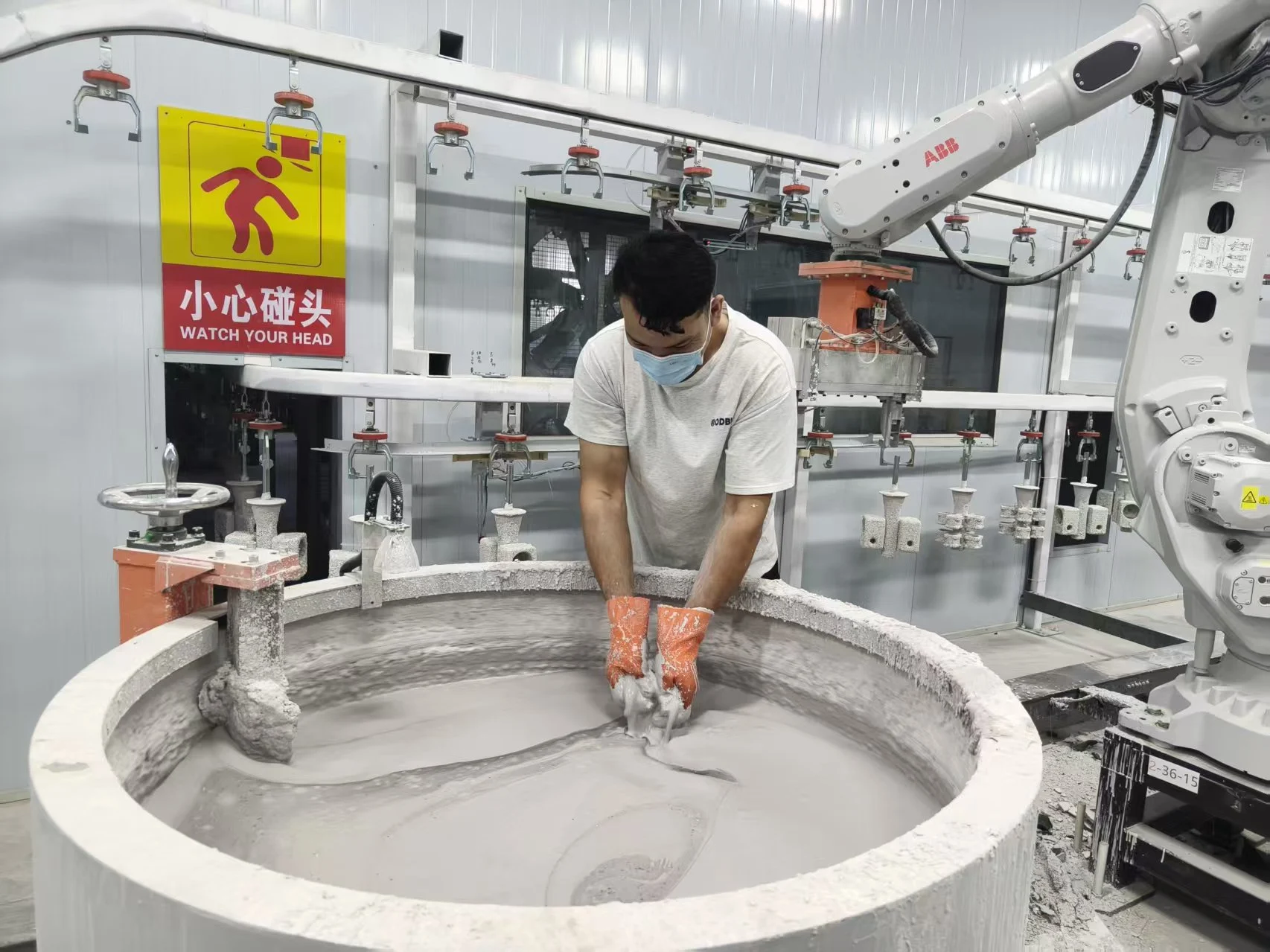
 Climate-Controlled Shell Drying Rooms
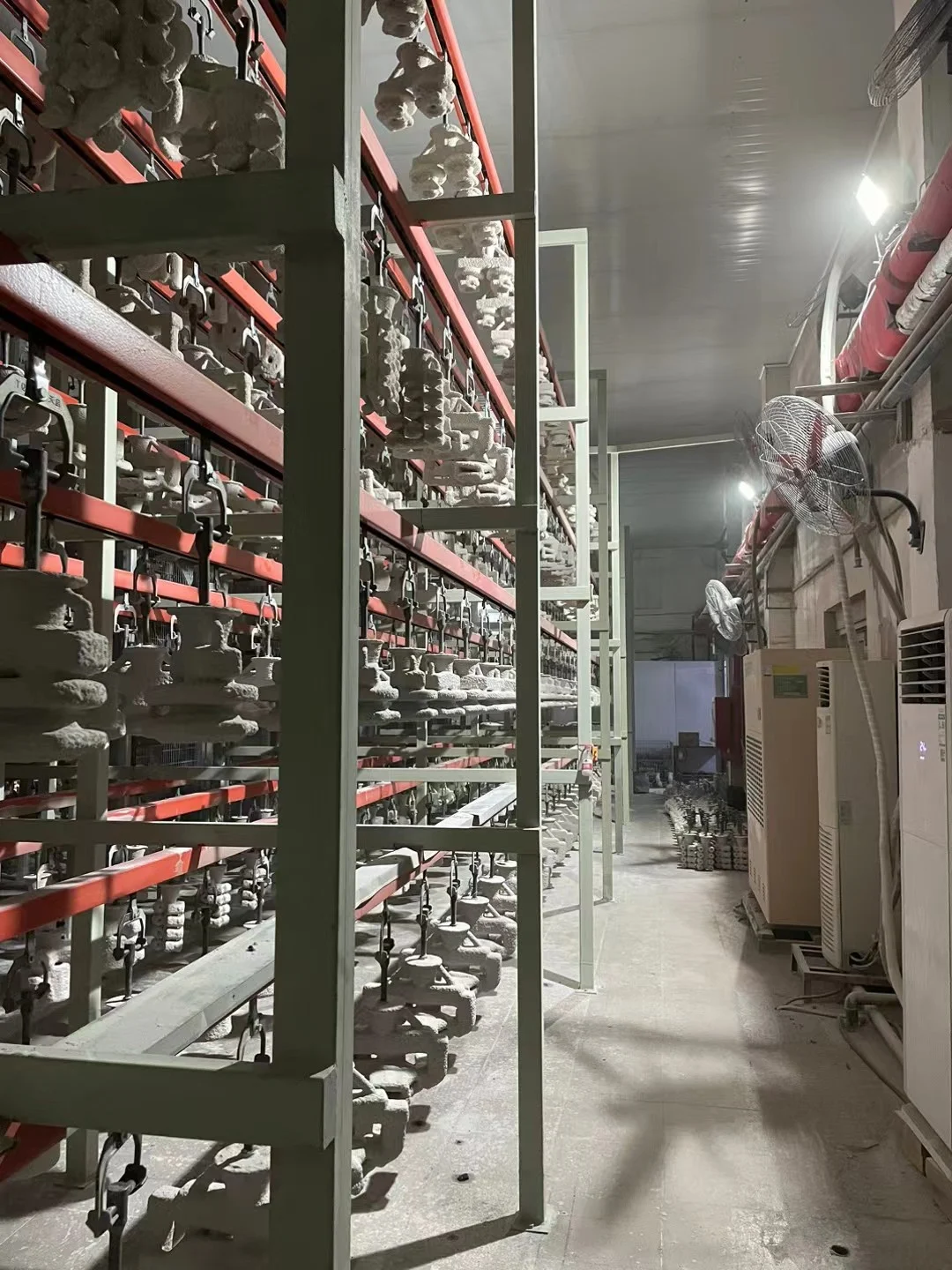
VastCasting operates automated robotic dipping arms inside constant-temperature and humidity-controlled shell drying rooms, ensuring consistent binder cross-linking, uniform slurry buildup, and zero shell cracking during steam dewaxing.
Technology Selection Rule of Thumb
When evaluating binder technologies for your custom engineering drawings, consider required surface quality, dimensional tolerance limits, and secondary machining strategies:
When manufacturing stainless steel valve bodies, fluid impellers, food processing fittings, turbine parts, or components requiring an as-cast Ra 3.2 µm surface finish and minimal machining allowances.
When producing carbon steel brackets, agricultural wear components, mining wear plates, or heavy equipment hardware where low initial tooling costs and competitive unit pricing take priority over surface smoothness.
Side-by-Side Process Matrix: Silica Sol vs. Water Glass
Evaluate technical parameters including dimensional casting tolerances, as-cast surface roughness, piece weight limits, compatible alloys, and overall tooling economics.
| Engineering Feature / Parameter | Silica Sol Investment Casting | Water Glass Investment Casting |
|---|---|---|
| Primary Binder System | Colloidal Silica Sol (SiO₂) | Sodium Silicate (Water Glass / Liquid Glass) |
| Refractory Shell Materials | Zircon Flour, Zircon Sand, Fused Silica | Quartz Sand, Quartz Flour, Stucco |
| Dimensional Tolerance Grade (ISO 8062) | CT4 – CT6 (High Precision) | CT7 – CT9 (Standard Precision) |
| As-Cast Surface Roughness (Ra) | Ra 3.2 – 6.3 µm (125 – 250 µin) | Ra 12.5 – 25.0 µm (500 – 1000 µin) |
| Single Piece Weight Range | 0.05 kg to 80 kg (0.11 lbs to 176 lbs) | 0.5 kg to 150 kg (1.1 lbs to 330 lbs) |
| Primary Compatible Alloys | Stainless Steel (304/316L), Duplex 2205/2507, Superalloys | Carbon Steel (WCB, 1045), Low-Alloy Steel (4140, 8620) |
| Pattern Wax Material | Medium-Temperature Compound Wax | Low-Temperature Paraffin / Stearic Acid Wax |
| Tooling & Mold Investment | Moderate to higher initial tooling cost | Lower initial mold tooling cost |
| Secondary Machining Requirement | Minimal (0.5 mm – 1.5 mm stock allowance) | Moderate (2.0 mm – 4.0 mm stock allowance) |
| Typical Target Applications | Valves, pump housings, turbine blades, medical devices | Agricultural equipment, excavator teeth, trailer brackets |
Engineering Guidance: Choosing Silica Sol
Silica sol precision investment casting is the preferred manufacturing path when components feature strict dimensional tolerances, thin-walled cross-sections, or intricate internal fluid channels. Combining medium-temperature compound pattern wax with high-purity zircon slurry prevents shell deformation and thermal expansion defects during automated steam dewaxing.
Because the as-cast surface roughness averages Ra 3.2 µm, non-mating functional and cosmetic surfaces can frequently be used as-cast without additional grinding or hand polishing. This near-net-shape capability offsets higher initial tooling costs by eliminating expensive multi-axis CNC milling operations.
Engineering Guidance: Choosing Water Glass
Water glass investment casting delivers outstanding cost efficiency for heavy structural carbon and low-alloy steel parts that prioritize mechanical strength over fine cosmetic surface finishes. The sodium silicate chemical binder sets rapidly, enabling shorter shell-building cycles and substantial raw material savings for larger structural castings.
Although as-cast surface roughness is higher (Ra 12.5 µm), combining water glass casting blanks with in-house CNC finish machining at VastCasting allows customers to achieve critical bearing fit tolerances and sealing surfaces while keeping overall casting blank procurement costs exceptionally low.
Integrated Dual-Process Foundry Manufacturing
VastCasting operates dedicated silica sol and water glass investment casting lines in China alongside a state-of-the-art in-house CNC machine shop. Our engineering team conducts comprehensive Design for Manufacturability (DFM) reviews to help you evaluate drawing tolerances, select alloys, and optimize unit costs before mold production begins.
Step-by-Step Investment Casting Workflow
At VastCasting, our step-by-step investment casting process pairs advanced silica sol ceramic shell techniques with rigorous inline quality verification. From high-accuracy wax pattern injection to automated dewaxing and pouring, down to 100% in-house CNC machining, every production stage is engineered to guarantee strict casting tolerances (CT4–CT6) and superior as-cast surface roughness (Ra 3.2–6.3 μm).
Wax Injection & Pattern Assembly
High-precision aluminum dies inject temperature-controlled industrial wax to produce dimensionally exact pattern replicas. Skilled technicians meticulously assemble these individual wax patterns onto a central wax runner tree, building a balanced gating system engineered for uniform molten metal flow.
- ✓ Key Control: Automated wax temperature, injection pressure, and mold dwell time regulation
- ✓ Quality Inspection: 100% visual audit and dimensional verification for shrinkage control
Ceramic Shell Building
The assembled wax tree undergoes repeated dipping cycles into high-purity silica sol slurry and refractory zircon sand. Building multiple primary and backup ceramic layers creates a durable, heat-resistant shell engineered to withstand intense thermal shock during metal pouring.
- ✓ Key Control: Climate-controlled drying rooms maintaining constant temperature and humidity
- ✓ Quality Inspection: Slurry viscosity monitoring and ceramic layer thickness testing
High-Pressure Dewaxing
The finished ceramic shell is loaded into a high-pressure steam autoclave for flash dewaxing. Rapid heating instantly melts out the inner wax patterns before thermal expansion can crack the ceramic structure, leaving a clean, high-precision negative mold cavity.
- ✓ Key Control: Ultra-fast steam pressure buildup to prevent shell wall stress
- ✓ Sustainability: Closed-loop wax reclamation system for eco-friendly pattern reuse
Shell Sintering & Metal Pouring
Hollow ceramic shells are preheated up to 1100°C in sintering kilns to burn off organic residues and maximize strength. Concurrently, medium-frequency induction furnaces melt specified alloy grades such as high-performance stainless steel castings, superalloys, or carbon steel prior to precision atmospheric or vacuum pouring.
- ✓ Key Control: Real-time optical pyrometer tracking for exact melt pouring temperature
- ✓ Quality Inspection: On-site optical emission spectrometer (OES) melt composition verification
Shell Knockout & Gate Removal
Once cooled, high-frequency pneumatic vibration equipment breaks away the outer ceramic shell. Raw investment casting blanks are carefully detached from the central gating tree using high-precision plasma cutting or high-speed abrasive cutoff machinery.
- ✓ Key Control: Precision gate stub grinding aligned with original part geometry
- ✓ Quality Inspection: Initial visual screening for surface inclusions or tear defects
Heat Treatment & Surface Finishing
As-cast blanks undergo specialized thermal processing (solution annealing for stainless steels, stress relieving, or tempering) to optimize mechanical properties. High-velocity shot blasting cleans off residual ceramic scale, producing a smooth Ra 3.2–6.3 μm finish.
- ✓ Key Control: Calibrated furnace soaking profiles and rapid water quenching cycles
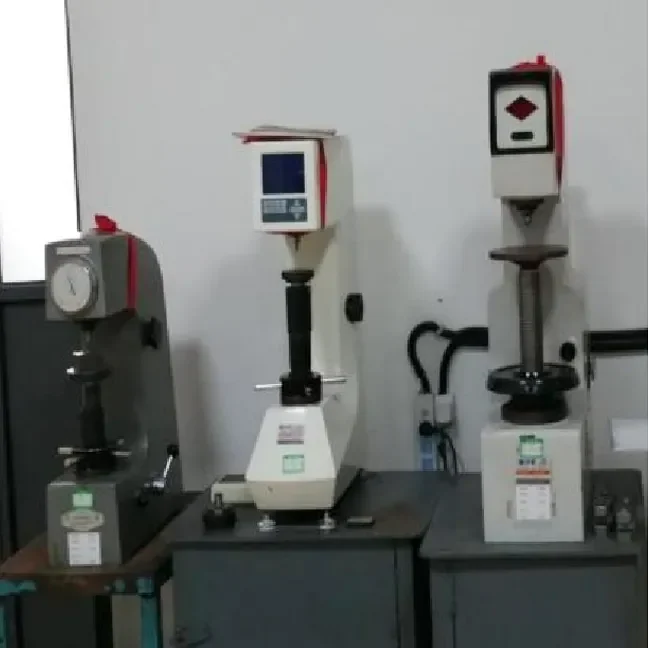
- ✓ Quality Inspection: Hardness testing (HBW/HRC) and metallographic structure analysis
In-House CNC Machining & Quality Inspection
To eliminate multi-vendor delays and avoid quality disputes, raw casting blanks transition directly into VastCasting's internal precision CNC machine shop. Utilizing multi-axis CNC lathes and machining centers, we perform precision turning, milling, drilling, and tapping to achieve exact CT4 tolerances, critical threads, and polished sealing faces.
Quality Control Gates Across Process Stages
Our ISO-certified quality management system enforces rigorous process control gates across every phase of the lost wax investment casting process. The technical matrix below outlines key foundry equipment, operating parameters, and quality verification standards:
| Process Stage | Core Technology / Equipment | Key Operating Parameter | Quality Gate Verification |
|---|---|---|---|
| Pattern & Tree Assembly | Aluminum Injection Dies & Auto Press | Wax Injection Temp: 58°C - 64°C | 100% Visual & Dimensional Audit |
| Ceramic Shell Building | Silica Sol & Zircon Slurry Line | Drying Chamber: 55% - 65% RH | Slurry Viscosity & Shell Layer Testing |
| Sintering & Pouring | Medium-Frequency Induction Furnace | Pouring Temp: 1520°C - 1650°C | In-Furnace Spectrometer Melt Analysis |
| Heat Treatment | Solution Annealing Furnace | Soaking Temp: 1050°C - 1150°C | Hardness Testing & Metallographic Check |
| Machining & Inspection | 3/4/5-Axis Machining Centers | Tolerance Class: CT4 - CT6 | 3D CMM & NDT (UT/RT/PT) Certification |
Technical Capabilities & Engineering Parameters
VastCasting operates specialized investment casting lines engineered for demanding industrial standards. Learn more about our comprehensive manufacturing capabilities as we maintain strict dimensional tolerances, superior as-cast surface roughness, and flexible weight capacities across high-complexity components.
Casting Tolerances
CT4 – CT6
ISO 8062 and GB/T 6414 precision ratings achieved through temperature-controlled shell making.
Surface Roughness
Ra 3.2 – 6.3 µm
Superior as-cast surface finish, customizable to Ra 0.8 µm via CNC machining and polishing.
Unit Weight & Size
0.05 – 80 kg
Envelope dimensions up to 800 × 600 × 500 mm for intricate lost-wax casting geometry.
Annual Capacity
5,000+ MT
High-volume precision output supported by automated slurry coating and drying lines.
Quantitative Parameter Matrix
Compare key engineering parameters across our primary casting and secondary machining processes to match your project specifications.
| Process Method | Tolerance Class | Surface Finish | Weight Range |
|---|---|---|---|
| Silica Sol Investment Casting | ISO 8062 CT4–CT6 | Ra 3.2 – 6.3 µm | 0.05 – 80 kg |
| Water Glass Investment Casting | ISO 8062 CT7–CT9 | Ra 12.5 µm | 1.0 – 120 kg |
| In-House Precision CNC Machining | ±0.005 mm | Ra 0.8 – 1.6 µm | 0.05 – 100 kg |
| Electropolishing & Surface Prep | N/A (Surface Only) | Ra 0.4 – 0.8 µm | 0.05 – 80 kg |
Engineering Verification
Every melt lot and casting batch undergoes laboratory inspection to verify dimensional accuracy, internal soundness, and exact alloy chemistry.
- Coordinate Measuring Machine (CMM) & 3D laser scanning
- Direct-reading optical emission spectrometer chemical analysis
- Hydrostatic, X-ray, and dye penetrant non-destructive testing
Quality Assurance & Technical Capabilities
Automated manufacturing controls and environmental monitoring ensure consistency from wax pattern to finished part.
Climate-Controlled Shell Workshop
Constant temperature and humidity controls prevent ceramic shell deformation, maintaining CT4–CT6 casting tolerances consistently.
Automated Slurry Coating
Robotic dipping and sanding equipment guarantee uniform shell wall thickness and optimal as-cast surface roughness.
100% Melt Spectrometer Verification
In-house optical emission spectrometers verify chemical element compliance before pouring each heat of steel or superalloy.
Require Specialized Parameters for Your Project?
Our engineering team provides full design-for-manufacturability (DFM) reviews and customized tolerance charts for your 3D drawings.
Investment Casting Alloys & Poured Materials
VastCasting manufactures high-precision investment castings across a comprehensive spectrum of ferrous and non-ferrous alloys. From corrosion-resistant stainless steel castings and high-strength duplex alloys to extreme-temperature superalloys and structural carbon steels, our foundry strictly controls chemistry and microstructural integrity to meet your exact engineering specifications.
Stainless Steel Alloys
Stainless steel investment casting delivers exceptional corrosion resistance, hygienic purity, and structural reliability for fluid control, chemical, and food processing applications.
Duplex & Super Duplex
Duplex steel casting combines double the yield strength of conventional austenitic steel with supreme resistance to pitting, crevice corrosion, and chloride cracking.
Superalloys & Nickel
Superalloy investment casting produces components capable of enduring extreme thermal shock, hot oxidation, and severe mechanical stress without losing strength.
Carbon & Low-Alloy Steels
Cost-effective structural alloys offering versatile strength-to-weight ratios, high wear resistance, and excellent response to specialized heat treatments.
100% Melt Spectrometric Verification
Prior to pouring each furnace charge, liquid metal samples are verified using direct-reading Optical Emission Spectrometry (OES) to guarantee exact chemical element compliance.
Material Equivalency & Application Matrix
Selecting the optimal casting alloy requires balancing corrosion resistance, yield strength, machinability, and total lifecycle cost. VastCasting maintains strict heat-lot chemistry control and provides certified EN 10204 3.1 Material Test Reports (MTR) with every shipment.
| Material Class | US Standard (ASTM / UNS) | EU Standard (EN / DIN) | Core Performance Trait | Typical Application |
|---|---|---|---|---|
| Austenitic Stainless | ASTM A351 CF8M (316) | 1.4408 / GX5CrNiMo19-11-2 | High general corrosion & pitting resistance | Pump housings, valve bodies, sanitary fittings |
| Precipitation Hardening | ASTM A747 CB7Cu-1 (17-4PH) | 1.4542 / GX5CrNiCuNb16-4 | High yield strength + heat-treatable hardness | Aerospace brackets, structural fasteners, shafts |
| Duplex Stainless | ASTM A890 Grade 4A (2205) | 1.4470 / GX2CrNiMoN22-5-3 | Immunity to stress corrosion cracking | Offshore manifolds, desalination pumps, chemical valves |
| Nickel Superalloy | ASTM B443 / UNS N06625 | 2.4856 / NiCr22Mo9Nb | Extreme thermal shock & hot acid resistance | Turbine blades, turbocharger housings, exhaust impellers |
| Low-Temp Carbon Steel | ASTM A352 Grade LCC | 1.1133 / 20Mn5 | High impact toughness down to -46°C | Cryogenic valve bodies, cold-climate pipelines |
Real-Time OES Spectrometry
In-house Optical Emission Spectrometry verifies molten metal chemistry prior to tapping each heat, guaranteeing target elemental composition.
In-House Thermal Processing
Fully integrated solution annealing, quenching, stress relieving, and precipitation hardening furnaces achieve optimized grain structures and hardness.
EN 10204 3.1 Material Certification
Every production batch includes full Material Test Reports (MTR) covering actual chemical analysis, tensile strength, yield strength, elongation, and hardness.
In-House Value-Added Services: Heat Treatment & Surface Finishing
Outsourcing post-casting processing introduces multi-vendor risk, logistical bottlenecks, and dimensional variances. At VastCasting, we perform all critical thermal processing and secondary casting surface finishing within our integrated production facility. From high-temperature solution annealing for stainless steel castings to automated surface passivation and precision grinding, our single-roof workflow controls metallurgy, surface integrity, and delivery timelines with uncompromised rigor.
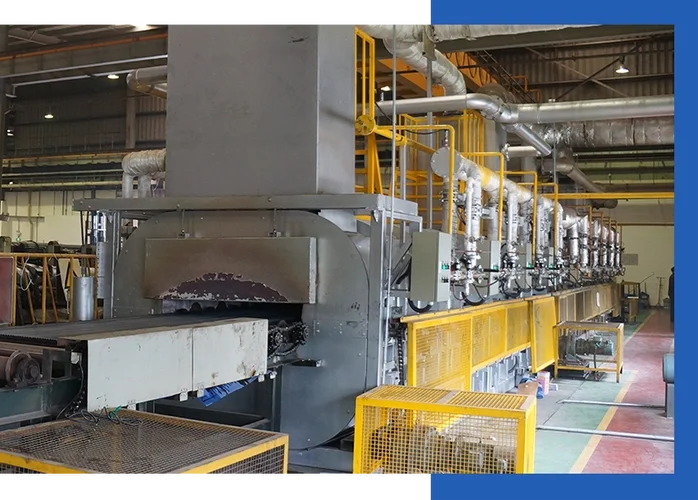
Advanced Investment Casting Heat Treatment
Controlled thermal processing is essential to restore corrosion resistance, refine grain structures, and achieve targeted mechanical properties. Our in-house metallurgical operations adhere to strict pyrometry standards to guarantee uniform structural integrity across every production batch.
- Solution Annealing Stainless Steel: Heated to 1050°C–1150°C followed by rapid water quenching to re-dissolve chromium carbide precipitates, maximizing corrosion resistance in 304, 316L, 2205 Duplex, and 2507 Super Duplex alloys.
- Quenching & Tempering (Q&T): Atmosphere-controlled liquid quenching and tempering for carbon steels (WCB, LCC) and low-alloy steels (4140, 8620) to deliver optimal tensile strength, hardness, and impact toughness.
- Stress Relieving & Normalizing: Thermal stress-relief cycles applied prior to secondary CNC machining to eliminate internal casting stresses, preventing component warpage and maintaining tight dimensional tolerances.
- Metallurgical Quality Verification: On-site optical emission spectrometry, Rockwell/Brinell hardness testing, and microstructural analysis validate every heat treatment run against engineering specifications.
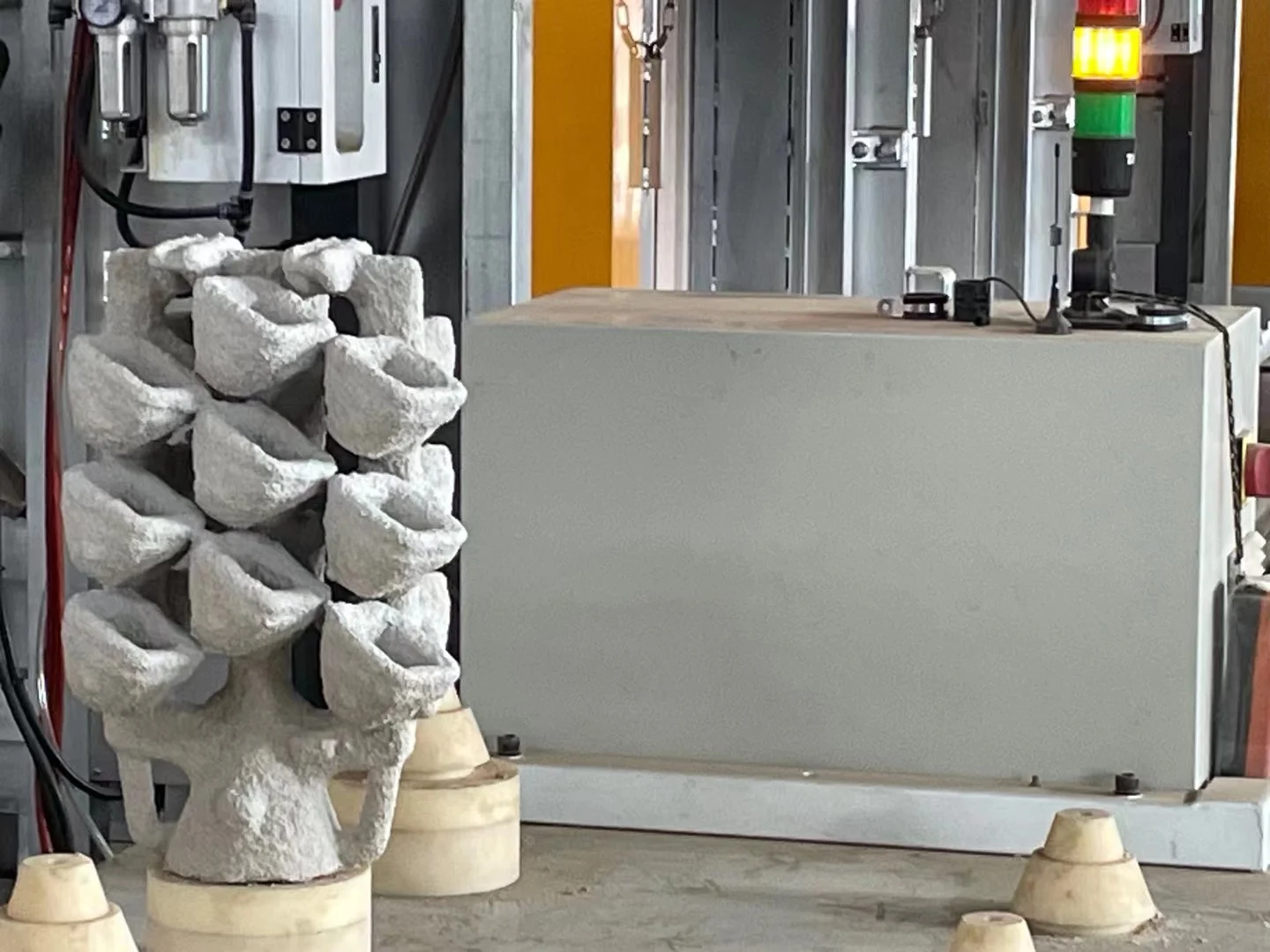
Precision Casting Surface Finishing & Preparation
Flawless surface condition is critical for sanitary fluid valves, high-stress automotive assemblies, and aerospace hardware. Our comprehensive surface treatment line improves cosmetic appearance while preparing blanks for precision CNC machining or direct assembly.
- Shot Blasting & Media Blasting: Stainless steel shot and ceramic bead blasting eliminate ceramic shell residue and oxide scale, producing a clean, uniform matte finish (Ra 3.2–6.3 µm).
- Chemical Pickling & Passivation: Fully compliant with ASTM A967, our eco-friendly acid passivation lines remove free iron and surface contaminants to rebuild the passive chromium oxide layer on stainless steel components.
- Electropolishing & Mechanical Polishing: Micro-smoothing process that reduces surface roughness below Ra 0.4 µm for valve body fittings, food-grade equipment, and pharmaceutical fluid handling components.
- Gating Removal & Precision Grinding: Automated robotic and manual grinding operations remove sprue stubs, parting lines, and surface flash while maintaining tight casting envelope dimensions.
Processing Specifications & Alloy Compatibility
Standard operational parameters utilized in our daily single-facility thermal and surface finishing workflows.
| Service Process | Operating Parameters / Standards | Compatible Material Grades | Primary Engineering Benefit |
|---|---|---|---|
| Solution Annealing | 1050°C–1150°C, Water Quench / ASTM A380 | 304, 316, 316L, 2205, 2507, Inconel | Eliminates intergranular corrosion; restores ductility |
| Quench & Temper | Controlled Atmosphere Furnace, Oil/Water Quench | WCB, LCC, 8620, 4140, 17-4PH | Increases yield strength, hardness, and wear resistance |
| Acid Passivation | Nitric / Citric Bath per ASTM A967 | All Stainless Steel & Superalloy Castings | Removes free iron; prevents premature rusting |
| Electropolishing | Chemical Bath (Target Ra < 0.4 µm) | 304L, 316L Sanitary Valve Components | Ultra-smooth finish; reduces bacterial adhesion |
| Shot Blasting | Stainless Steel Shot / Aluminum Oxide Grit | Carbon Steel, Stainless Steel, Aluminum Alloys | Uniform cosmetic appearance; scale-free surface |
Why Single-Facility Post-Processing Eliminates Sourcing Risk
Managing separate foundries, heat treatment shops, and finishing vendors creates fragmented accountability and expensive logistics. VastCasting integrates every post-casting milestone within one certified quality management framework.
One engineering team oversees metallurgical composition, thermal treatment, and final dimensional checks—zero vendor finger-pointing.
By eliminating inter-vendor transport and staging delays, your raw investment castings move immediately into thermal processing and finishing.
Heat-treated and passivated blanks transition directly to our on-site precision CNC machining department for immediate tight-tolerance finishing.
Frequently Asked Questions About Precision Investment Casting
Explore technical answers regarding production lead times, dimensional tolerances, material selection, quality inspection standards, and process differences. VastCasting combines specialized investment casting with in-house CNC machining to streamline your global component sourcing.
How does precision investment casting compare to sand casting in cost, surface finish, and tolerances?
Precision investment casting (lost wax casting) delivers high dimensional accuracy (ISO 8062 CT4–CT6) and smooth as-cast surface finishes (Ra 3.2–6.3 μm), making it ideal for near-net-shape components. Sand casting typically yields broader dimensional tolerances (CT9–CT11) and rougher surface finishes (Ra 12.5–25 μm), requiring extensive finish machining.
Although tooling investment is higher for lost wax casting, the reduction or complete elimination of downstream CNC machining, raw material waste, and assembly labor provides a significantly lower total cost per part for complex, thin-walled, or high-alloy components.
What are the typical lead times for mold tooling, sample validation, and mass production runs?
VastCasting maintains transparent, predictable lead times across every stage of development and volume production:
- Tooling & Mold Fabrication: 15 to 20 calendar days, depending on geometry complexity and core sliding requirements.
- First Article Samples (T1): 7 to 10 days post-tooling, fully inspected with CMM dimensional reports and material test certificates.
- Mass Production Batch: 3 to 4 weeks following formal sample approval.
Expedited DFM assessments and rapid 3D printed wax pattern prototyping options are also available for fast-track product launches.
Does VastCasting perform both investment casting pouring and high-precision CNC machining in-house?
Yes. VastCasting functions as a fully integrated single-source manufacturer, housing both investment casting shell operations and precision CNC machine shops under one management roof.
By executing casting, heat treatment, and 4-axis/5-axis CNC machining within the same facility, we eliminate multi-vendor logistics delays, prevent disputes over machining allowances or subsurface defects, and maintain end-to-end quality control.
What is the technical and cost difference between Silica Sol and Water Glass investment casting?
The main distinction lies in the binder chemistry, shell curing environment, precision level, and targeted alloy categories:
Silica Sol Process
Best for stainless steel, duplex, and superalloys. Achieves high accuracy (CT4–CT6) and smooth surfaces (Ra 3.2 μm). Recommended for valve bodies, marine hardware, and turbine components.
Water Glass Process
Economical choice for carbon steel and low-alloy structural parts. Provides CT7–CT9 tolerances and Ra 12.5 μm surface finish, making it cost-effective for heavy industrial and agricultural machinery.
How does VastCasting prevent casting defects and guarantee internal sound structure?
We implement comprehensive quality-assurance protocols throughout all seven manufacturing steps:
- MAGMASOFT® Mold Flow Simulation: Analyzes solidification dynamics and gating systems to prevent shrinkage porosity prior to tooling manufacture.
- Spectrometric Chemical Verification: Tests metal composition from every furnace melt before pouring.
- Non-Destructive Testing (NDT): In-house Radiographic Testing (X-ray), Magnetic Particle Inspection (MPI), and Dye Penetrant Testing (PT) detect micro-cracks or voids.
- 100% Pressure Integrity Testing: Hydrostatic and pneumatic testing for fluid handling, pump housing, and valve bodies.
Which metal alloys can be poured, and are official material certificates provided?
VastCasting specializes in pouring a wide spectrum of corrosion-resistant, heat-resistant, and structural alloy grades:
Stainless & Duplex Steels: 304/304L, 316/316L, 1.4408, 17-4PH, 2205 (F51), 2507 (F53).
Superalloys & Carbon Steels: Inconel 718/625, Hastelloy C276, Monel 400, WCB, LCC, 4140, 8620.
Every production lot is delivered with complete metallurgical traceability, including EN 10204 3.1 Material Test Reports (MTR) detailing exact chemical composition and mechanical properties.
What is your minimum order quantity (MOQ) and quoting response time for RFQs?
We maintain flexible order quantities tailored to part dimensions and material value. Standard production lots typically begin at 100 to 500 units, while low-volume prototype and pre-production batches are supported for engineering qualification.
Our engineering team delivers thorough DFM reviews and detailed commercial proposals within 24 business hours upon receipt of your 3D CAD files (STEP, IGS, DWG) and technical requirements.
Have Technical Drawing Questions?
Consult directly with VastCasting's engineering team. We review draft angles, wall thickness consistency, gating designs, and alloy choices to optimize your components for manufacturability.
Technical Downloads
Download our standard investment casting tolerance guidelines (ISO 8062 CT4-CT6) and alloy specification matrix.
Download Tolerance Chart PDF →Ready to Scale Your Precision Casting Project?
Submit your 3D CAD drawings to VastCasting for a comprehensive DFM feedback report, casting tolerance review, and direct foundry quote.
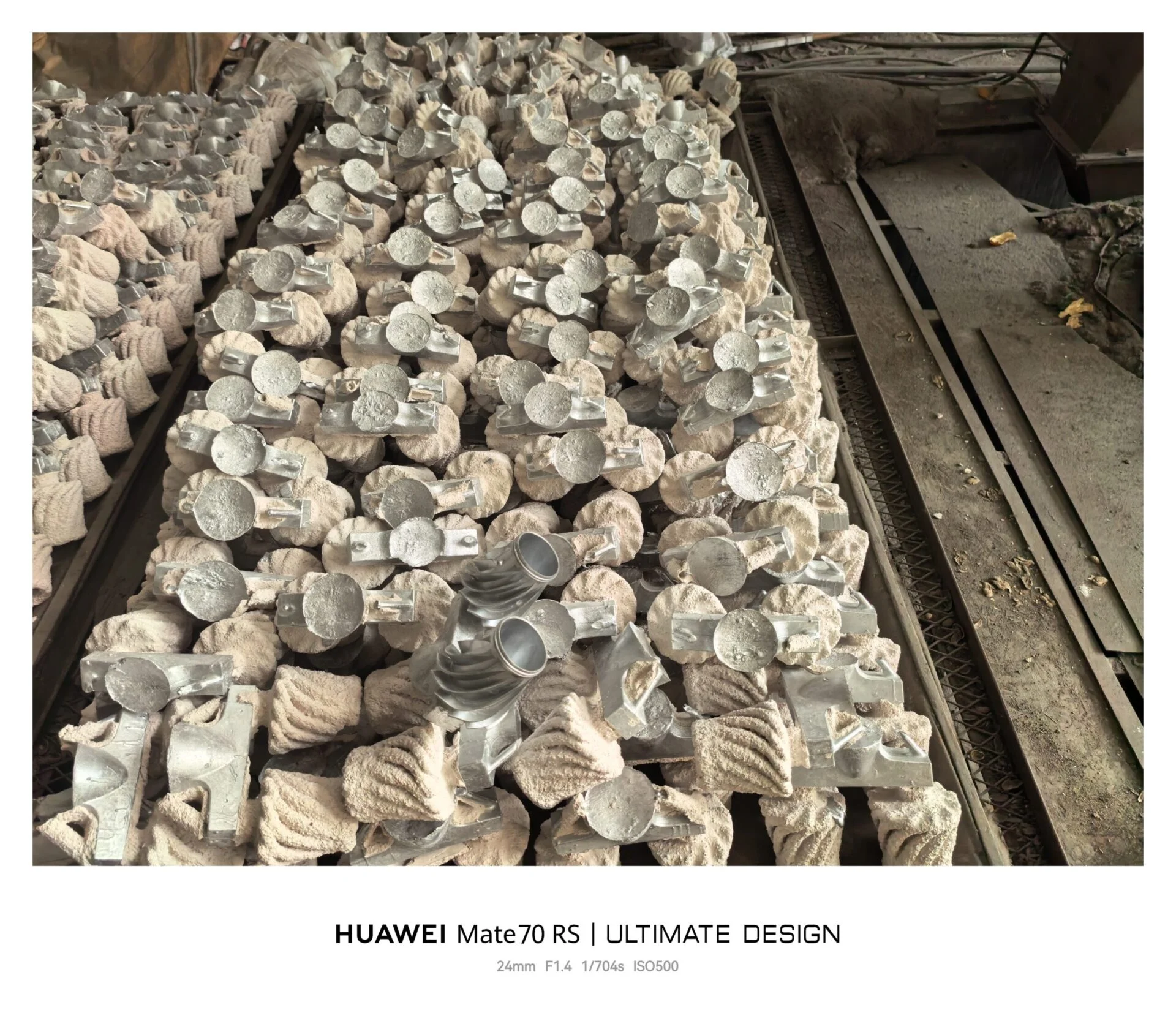
Turnkey CAD & DFM Analysis
Our casting engineers evaluate wall thickness transitions, shrinkage allowances, and draft angles to eliminate porosity before toolmaking.
Silica Sol Process
Near-net-shape stainless steel castings and superalloy castings featuring Ra 3.2μm finish and tight CT4–CT6 dimensional accuracy.
Water Glass Process
Cost-effective lost wax investment casting tailored for high-strength carbon and alloy steel parts up to 80 kg.
In-House CNC Machining
Seamless transition from raw investment-cast blanks to finished, precision-machined components under one roof.