The advantages of precision investment metal casting center on near-net-shape components, tight tolerances, and a superior surface finish for complex metal parts that would otherwise need heavy secondary machining. This guide covers the lost-wax process basics, alloy range, comparisons with sand casting, die casting, and CNC machining, plus industrial applications and partner selection checkpoints. Use it to decide when investment casting and precision CNC machining services belong in your sourcing plan.
Advantages of Precision Investment Metal Casting - Process Overview
Precision investment metal casting, historically known as lost-wax casting, is an advanced manufacturing technique engineered to produce high-accuracy metal components with intricate details. By utilizing sacrificial patterns and high-grade refractory ceramic shells, this method allows manufacturers to create complex, near-net-shape components that traditional forging or machining processes struggle to replicate economically.[1]
Modern industries rely on the advantages of precision investment metal casting to manufacture mission-critical parts across aerospace, automotive, energy, and medical sectors.
The Fundamentals of Lost-Wax Casting
Key fundamentals include:
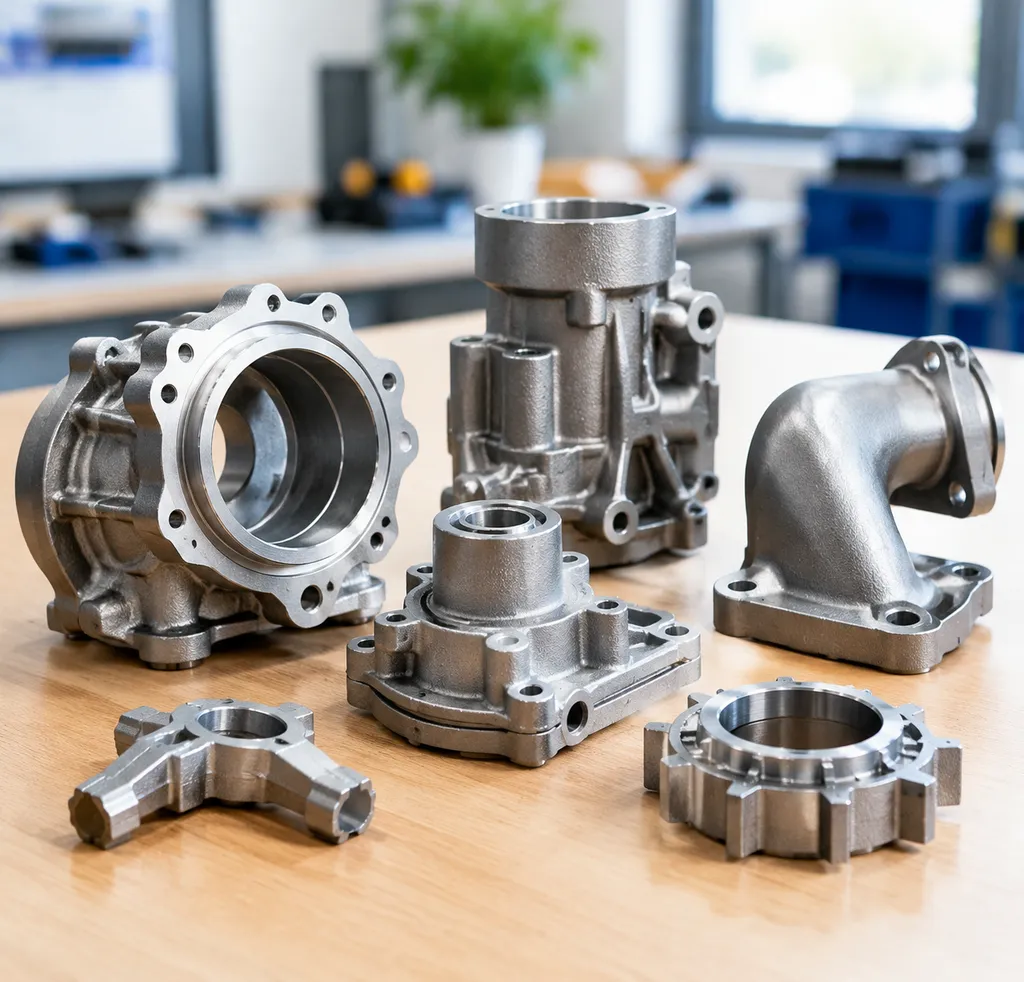
Near-Net-Shape Production: The final cast component mirrors the exact contours of the original wax pattern, minimizing the need for extensive secondary machining.
Broad Metallurgical Compatibility: Capable of pouring virtually any alloy, ranging from standard carbon steels and stainless steels to advanced nickel- and cobalt-based superalloys.
The Step-by-Step Investment Casting Process
- Wax Pattern Creation: High-grade molten wax is injected into a precision-machined metal die to create an exact replica of the desired part.
- Tree Assembly: Multiple wax patterns are welded onto a central wax sprue and runner system to form a tree (or cluster), maximizing casting efficiency per batch.
- Ceramic Shell Building: The wax tree is repeatedly dipped into a liquid ceramic slurry and coated with fine refractory stucco. The layer is dried, and the process is repeated multiple times to build a rigid, heat-resistant shell.
- Dewaxing (Lost-Wax Phase): The coated assembly is placed into a steam autoclave or high-temperature furnace. The wax quickly melts and drains out, leaving a hollow ceramic mold with the exact negative geometry of the part.[1]
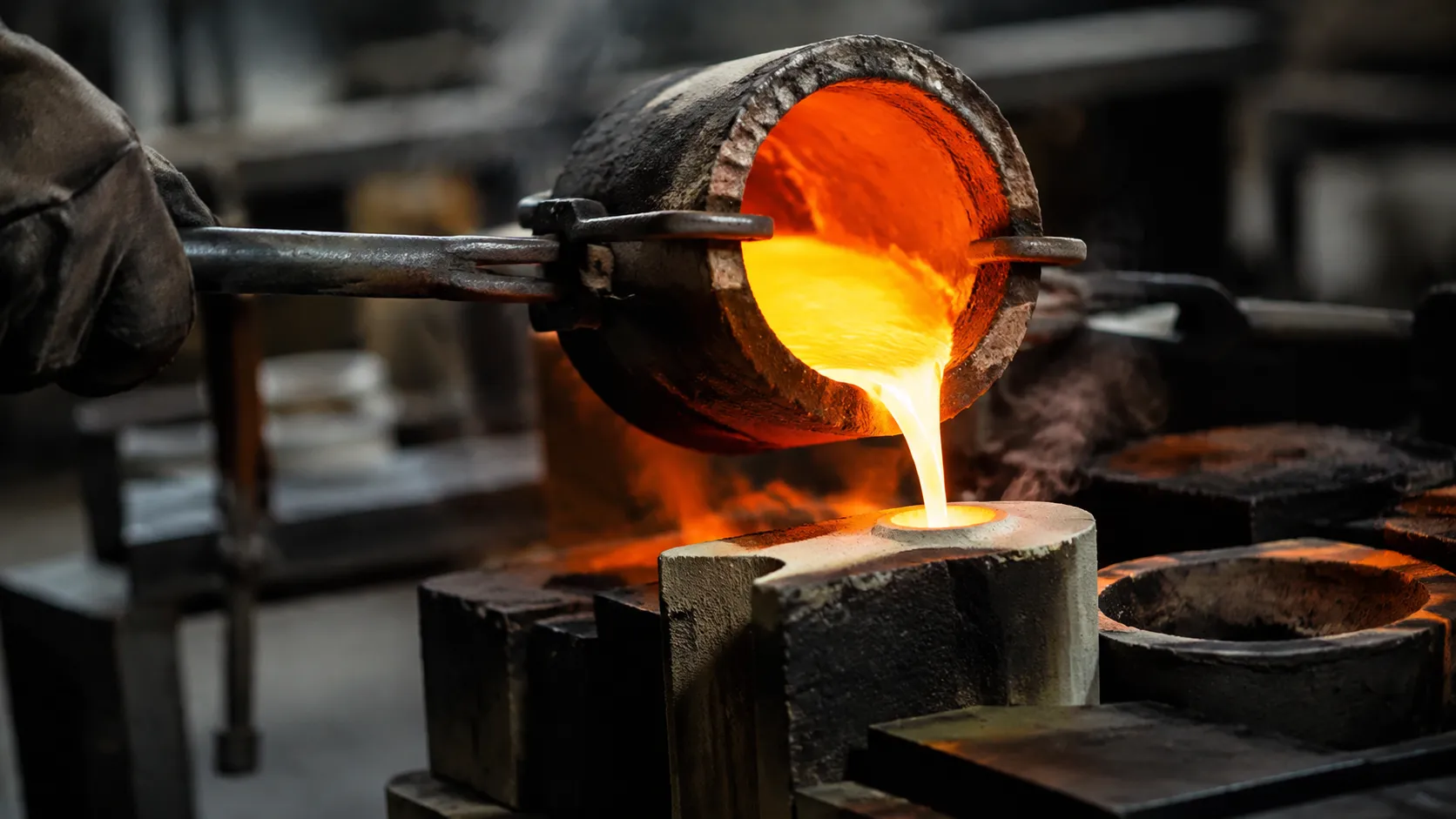
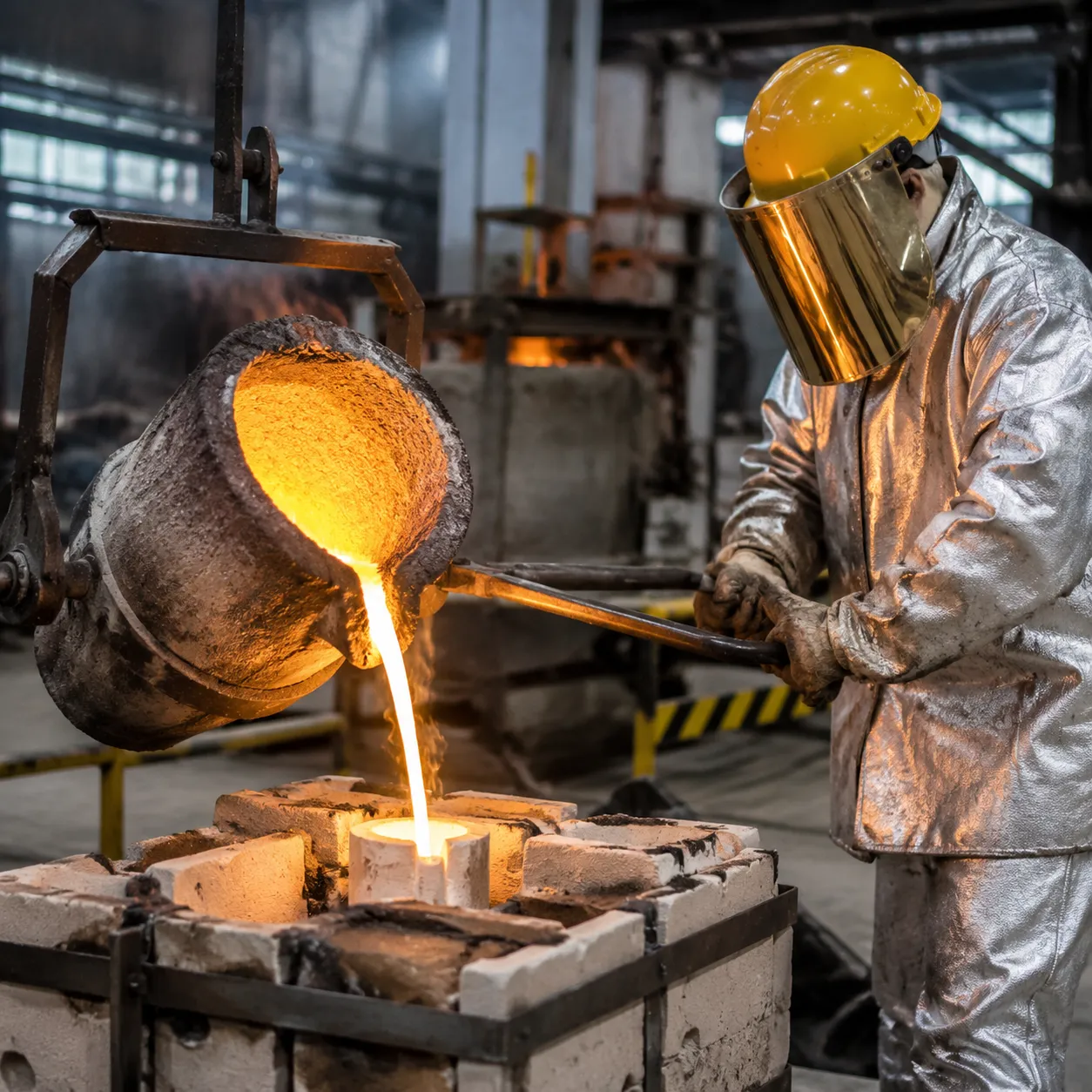
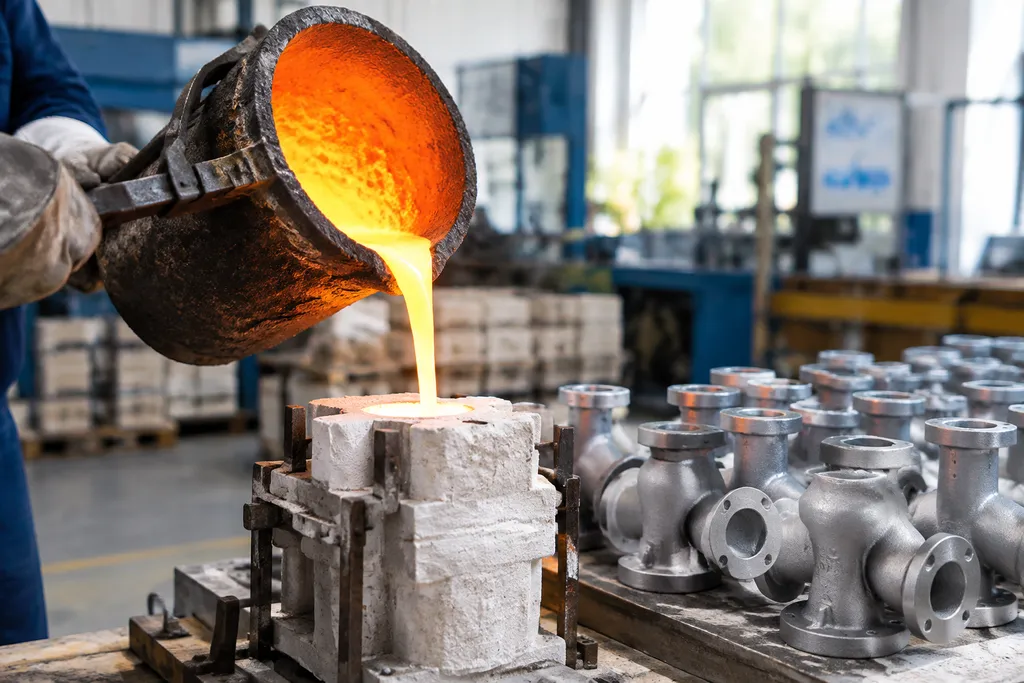
- Preheating and Pouring: The ceramic shell is fired at high temperatures (typically about 900-1100°C) to cure the mold and eliminate residual moisture. Molten metal is immediately poured into the preheated shell via gravity, vacuum, or pressure casting.[2]
- Shell Removal (Knockout): Once the metal cools and solidifies, the ceramic mold is mechanically fractured and removed using high-pressure water jets, vibration tables, or chemical leaching.
- Cut-off and Secondary Processing: Individual metal components are cut from the central gating system. Castings then undergo gate grinding, heat treatment, surface blasting, and final CNC machining to achieve the exact specified dimensions and surface requirements.
Key Advantages of Precision Investment Metal Casting
When evaluating metal forming processes, the advantages of precision investment metal casting stand out across critical engineering metrics. We produce near-net-shape components that minimize production bottlenecks, reduce assembly complexity, and deliver reliable metallurgical integrity. For high-stress applications, precision casting delivers specific structural and financial benefits that standard fabrication techniques cannot match.
High Dimensional Accuracy and Tight Tolerances
Investment casting reliably produces parts within exceptionally tight tolerances, often holding about ±0.005 inches per linear inch (±0.127 mm) as cast on well-controlled features. Because ceramic molds are formed around sacrificial wax patterns without parting lines, the finished castings avoid flash and parting shift entirely.[2]
- Repeatable Consistency: High-pressure wax injection ensures identical pattern dimensions batch after batch.
- Minimal Distortion: Rigid ceramic shell construction prevents mold wall movement during pouring.
- Secondary Operations: While many features require zero post-processing, critical mating surfaces can be fine-tuned through our in-house precision CNC machining services to reach exact micron-level fits.
Capability for Complex Geometries and Thin Walls
The process excels where conventional tooling reaches its physical limits. Complex internal passageways, undercuts, curved channels, and thin profiles can be cast as a single unified part.[4]
| Geometric Feature | Standard Machining | Investment Casting Capability |
|---|---|---|
| Minimum Wall Thickness | Limited by tool deflection (1.5-2.0 mm) | Down to 0.75 mm - 1.0 mm |
| Internal Undercuts | Requires multi-axis setups or impossible | Seamlessly formed via soluble wax cores |
| Component Consolidation | Multi-part assemblies requiring fasteners | Single integrated monolithic part |
Superior Surface Finish Quality
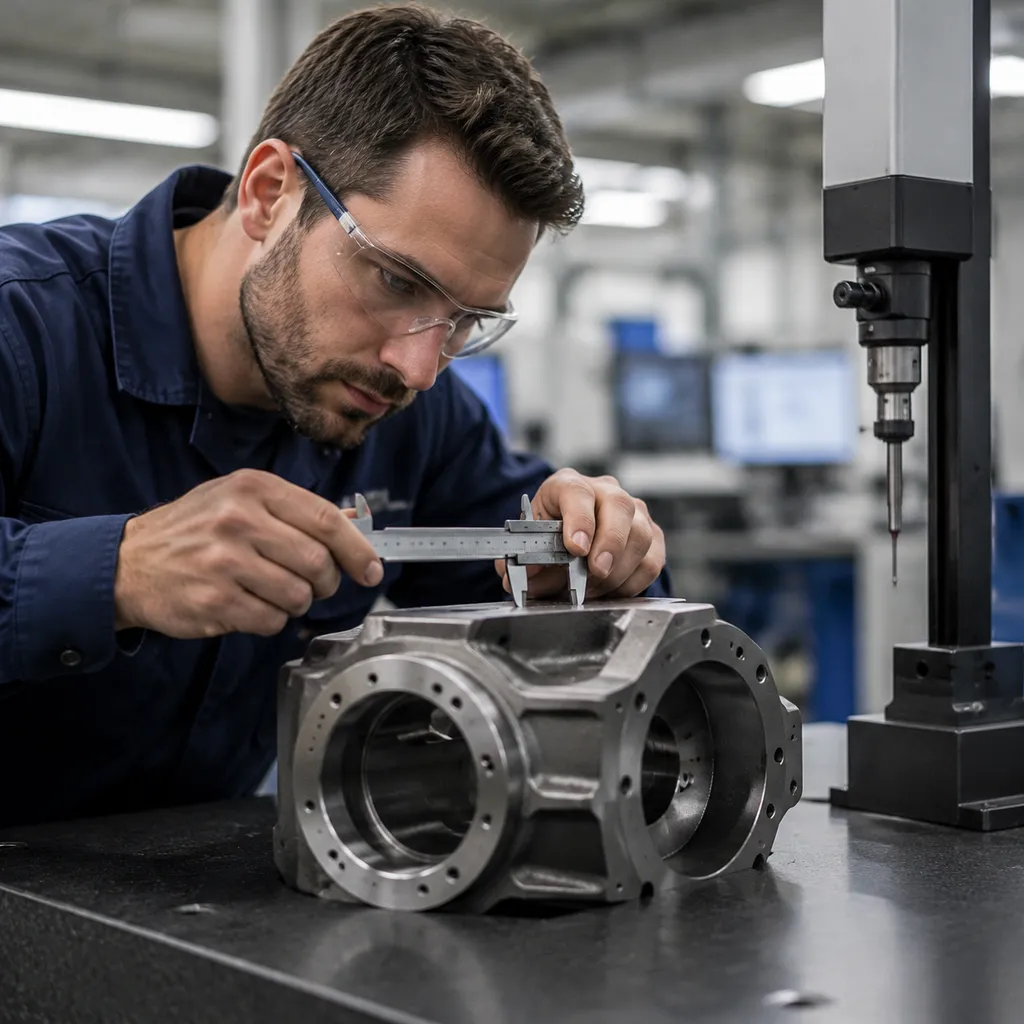
Investment casting delivers a superior surface finish straight out of the mold, typically achieving about 125 to 250 RMS (3.2 to 6.3 µm Ra). The fine refractory slurry applied during the primary dipping stage coats the wax pattern with a smooth, glass-like boundary layer.[2]
This clean finish eliminates standard casting defects like sand burn-in, rough texture, and orange-peel effects. For fluid handling, aesthetic parts, or sealing applications, this baseline smoothness reduces or completely bypasses mechanical grinding, blasting, and polishing.
Significant Reduction in Material Waste and Machining Costs
Subtractive manufacturing often generates high scrap rates, sometimes turning about 70% or more of expensive bar stock into unrecoverable chips. One of the core economic advantages of precision investment metal casting services is maximum material yield.[3]
- Near-Net-Shape Output: Parts are cast directly to the intended final envelope, preserving raw material.
- Tooling Life Extension: Less material removal means significantly less wear on cutting tools, drill bits, and milling inserts.
- Cycle Time Savings: Bypassing roughing cuts allows machine shops to focus strictly on threading, reaming, or critical bearing journals.
By pairing smart near-net casting with targeted secondary finishing, we cut material waste and production cycles on demanding engineering projects.
Material Versatility in Investment Casting
One of the standout advantages of precision investment metal casting is the sheer breadth of alloys we can pour. Unlike many alternative forming methods limited by melting temperatures or mold reactivity, this process accommodates virtually any meltable metal. As a provider of investment casting and precision CNC machining services, we routinely pour hundreds of compositions to deliver near-net-shape components tailored precisely to our clients' operating environments.
Ferrous Metals and Stainless Steel Alloys
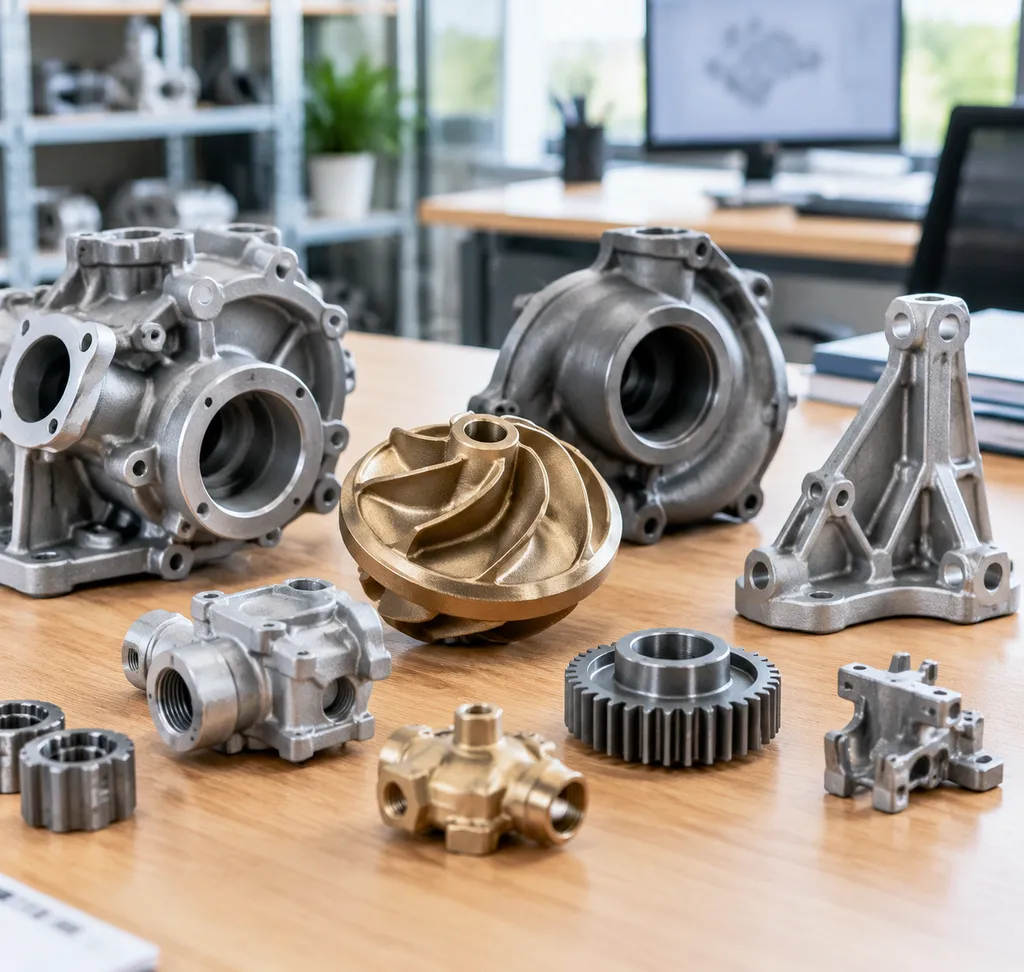
- Stainless Steels: Widely selected for corrosion resistance and strength. We produce high-demand grades, such as 304 stainless steel investment casting parts, alongside 316, 17-4 PH, and duplex stainless grades for marine, chemical, and fluid-handling systems.
- Carbon and Low-Alloy Steels: Excellent for structural brackets, mechanical levers, and heavy-duty wear components requiring heat treatment for enhanced hardness and toughness.
- Tool Steels: Cast directly into complex tooling inserts, dies, and cutting components, significantly cutting down on rough machining labor.
Non-Ferrous Metals and Exotic Superalloys
For extreme environments involving intense heat, corrosive chemicals, or weight restrictions, the process excels with non-ferrous metals and specialized grades.
| Material Category | Common Alloys | Key Performance Characteristics |
|---|---|---|
| Superalloys | Inconel (625, 718), Hastelloy, Monel | Outstanding creep resistance, oxidation protection, and strength at temperatures above 1,000°C. |
| Aluminum Alloys | A356, 6061 equivalent | Lightweight, high thermal conductivity, and good corrosion resistance for lightweight structural frames. |
| Copper & Bronze Alloys | Aluminum Bronze, Silicon Bronze | Superior anti-galling qualities, thermal conductivity, and biofouling resistance. |
| Cobalt-Based Alloys | Stellite series | Exceptional resistance to severe mechanical wear and erosion at elevated temperatures. |
Pouring high-temperature, exotic superalloys requires stringent vacuum melting and inert atmosphere controls. Investment casting makes it possible to form these difficult-to-machine materials into thin-walled, intricate geometries right out of the mold, reducing the need for costly secondary processing.
Precision Investment Casting vs. Other Manufacturing Methods
Choosing the right production route directly affects your component performance, lead times, and unit costs. As a provider of investment casting and precision CNC machining services, we routinely evaluate alternative manufacturing paths to deliver maximum value. Understanding the core advantages of precision investment metal casting compared to common metalworking processes ensures you select the optimal balance between initial tooling and final piece-part cost.
| Manufacturing Method | Dimensional Accuracy | Surface Finish | Geometry Complexity | Material Range |
|---|---|---|---|---|
| Investment Casting | High (about ±0.005 in/in) | Superior (Ra about 1.6-3.2 µm) | Extremely Complex | Virtually Any Alloy |
| Sand Casting | Moderate (about ±0.030 in/in) | Coarse (Ra about 6.3-12.5 µm) | Moderate | Broad |
| Die Casting | High (about ±0.002 in/in) | Very Smooth (Ra about 0.8-1.6 µm) | High | Non-Ferrous Only |
| Direct CNC Machining | Extremely High (about ±0.0005 in) | Ultra-Smooth (Ra about 0.4-1.6 µm) | Limited by Tool Access | Most Metals |
Investment Casting vs. Sand Casting
Sand casting remains a standard for heavy, bulk metal components, but precision lost-wax methods excel when accuracy and surface aesthetics matter:
- Tolerances and Finish: Sand casting leaves a rough surface that requires heavy machining to hit functional dimensions. The investment casting process yields near-net-shape components with tight tolerances directly out of the ceramic shell.
- Secondary Operations: Sand casting demands extensive milling and grinding, driving up labor and waste. Precision casting minimizes or completely eliminates these downstream operations.
- Thin-Wall Capabilities: Investment casting supports intricate, thin-walled cross-sections that would crack or fail to fill in standard sand molds.
Investment Casting vs. Die Casting
Die casting is built for massive, high-speed production volumes, yet it carries severe material and design constraints:
- Material Versatility: Die casting is essentially limited to non-ferrous metals with low melting points, such as aluminum, zinc, and magnesium. Investment casting accommodates high-temperature ferrous alloys, tool steels, stainless steels, and exotic superalloys.
- Tooling Investments: Die casting dies must withstand extreme hydraulic pressures, resulting in tooling costs that are significantly higher than investment casting wax molds.
- Internal Integrity: High-pressure die casting frequently traps air, leading to internal porosity that compromises structural integrity. Investment castings provide uniform metallurgical density and respond predictably to heat treatment.
Investment Casting vs. Direct CNC Machining
Direct CNC machining from solid billet delivers exceptional accuracy, but it becomes cost-prohibitive as geometries grow complex:
- Material Utilization: Machining intricate components from solid bar stock or billets can turn up to about 70% or more of raw stock into scrap chips. Precision investment casting pours metal only where needed, cutting raw material waste dramatically.
- Complex Internal Geometry: CNC cutting tools require line-of-sight access to remove material. Investment casting easily accommodates undercuts, curved cooling channels, and deep recesses that cutters simply cannot reach.
- Hybrid Efficiency: Rather than treating casting and CNC machining as competitors, we integrate them. We cast parts to near-net shape and apply precision CNC machining exclusively to critical bearing faces, mating surfaces, and threaded interfaces, minimizing cycle times and cutting overall unit costs.
Key Industrial Applications of Precision Cast Components
Modern manufacturing demands hardware that performs under extreme stress, tight space constraints, and harsh chemical environments. As a provider of investment casting and precision CNC machining services, we engineer parts that solve these engineering hurdles directly at the foundry level. The primary advantages of precision investment metal casting services shine brightest in sectors where part failure simply is not an option.
By delivering near-net-shape components with minimal need for costly secondary machining, investment casting serves as the manufacturing backbone for several core industries:
- Aviation and Space Exploration: Critical engine and structural hardware.
- Healthcare and Surgery: High-precision instruments and prosthetics.
- Power and Heavy Industry: Flow control, turbine assemblies, and high-wear components.
Aerospace and Defense Applications
Aerospace hardware requires low weight, thermal resilience, and strict dimensional repeatability. Precision investment casting allows us to cast complex internal cooling channels and thin walls that direct CNC machining cannot replicate economically.
- Turbine Blades and Vanes: Formed from nickel and cobalt superalloys for turbine blades and vanes that endure extreme combustion temperatures.
- Fuel System Components: Intricate valve bodies, manifolds, and nozzles cast without assembly joints, eliminating leak risks.
- Structural Brackets and Mountings: Delivering high strength-to-weight ratios with a superior surface finish that prevents micro-fractures under cyclic stress.
Medical Devices and Surgical Instruments
Medical manufacturing accepts zero defects. Precision investment casting handles biocompatible alloys like surgical stainless steel, cobalt-chrome, and titanium with absolute reliability.
- Orthopedic Implants: Knee and hip joint components engineered with exact contours and tailored surface textures for tissue integration.
- Operating Room Tools: Forceps, scalpel handles, and surgical clamps featuring intricate ergonomic curves and corrosion resistance against repeated autoclaving.
- Diagnostic Equipment Hardware: Compact, rigid housings that protect sensitive sensor arrays while maintaining tight tolerances.
Automotive, Energy, and Industrial Machinery
Heavy industrial sectors depend on high-volume production combined with wear-resistant metal chemistry. Precision casting lowers material costs across high-stress drive systems, subsea drilling equipment, and power plants.
- Fluid and Flow Management: Demanding pump housings, specialized valves, and high-efficiency pump impeller castings engineered to resist cavitation and abrasive slurry.
- Automotive Performance Parts: Automotive aftermarket investment castings such as turbocharger wheels, rocker arms, and exhaust brackets capable of continuous thermal cycling.
- Industrial Hardware: Heavy-duty linkages and gears produced via lost wax brass casting and stainless steel casting that slash assembly steps and eliminate excessive machine cycle times.
Limitations and Considerations of Investment Casting
While the advantages of precision investment metal casting deliver exceptional detail, tight tolerances, and superior surface finish, the process requires clear trade-offs. To evaluate if this method fits your project, you must weigh upfront engineering demands against long-term part performance.
Initial Tooling and Mold Costs
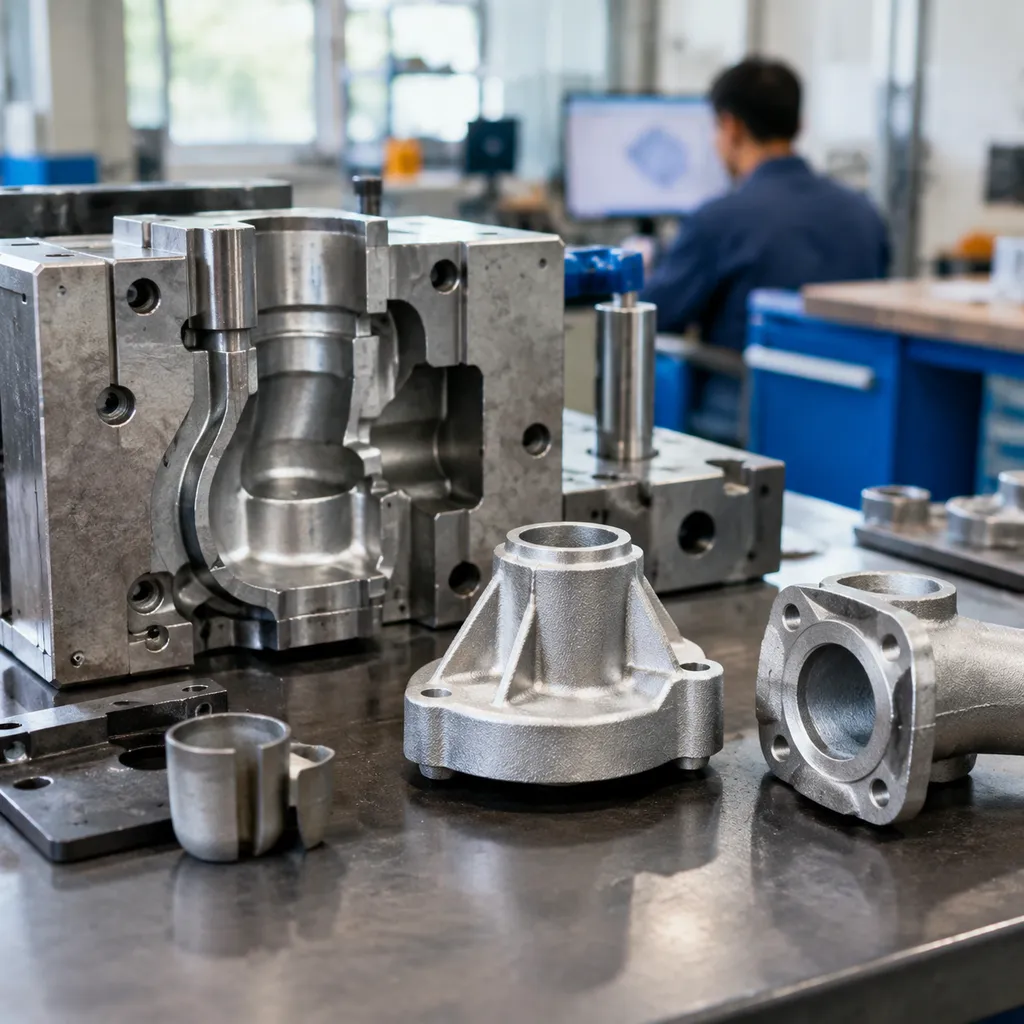
Precision investment casting relies on dedicated metal dies to produce sacrificial wax patterns. Because these dies dictate the final geometry of your cast parts, upfront tooling requires careful planning and capital commitment.
- Upfront Tooling Investment: Molds are typically machined from high-grade aluminum or tool steel. This results in higher initial costs than sand casting patterns, though they remain significantly cheaper than high-pressure die casting tooling.
- Design Optimization: Before cutting metal, advanced mold design and simulation is essential to verify gating, venting, and shrinkage allowances. This prevents costly mold modifications later.
- Cost Amortization: Upfront tooling is best justified by recurring production orders or complex, near-net-shape components where eliminating secondary CNC machining saves substantial money per unit.
Cycle Times and Volume Scalability
Investment casting involves multiple distinct manufacturing steps - wax injection, ceramic slurry dipping, multi-day drying, dewaxing, firing, pouring, and shell removal. Consequently, production lead times differ significantly from rapid, single-step processes.
| Production Factor | Investment Casting Impact | Strategic Workaround |
|---|---|---|
| Lead Times | Multi-layer ceramic shell building requires controlled drying periods between coats. | Batch processing and automated dipping lines compress multi-part cycles. |
| Low-Volume Runs | High labor and setup overhead can elevate unit costs on very small batches. | Use 3D-printed wax or polymer patterns for rapid prototyping without dedicated tooling. |
| High-Volume Scalability | Multi-cavity wax molds scale efficiently to thousands of units per run. | Combine high-cavitation tooling with integrated secondary machining cells. |
As a provider of investment casting and precision CNC machining services, we assist engineering teams in evaluating these production factors upfront. Balancing tooling costs and cycle timelines early guarantees that you capture the true structural and financial advantages of precision investment metal casting services.
Choosing a Partner for Precision Investment Metal Casting
To fully realize the advantages of precision investment metal casting services, your choice of manufacturing partner is critical. We are a provider of investment casting and precision CNC machining services, helping global OEMs design, cast, and finish high-performance metal components. The right foundry should not only deliver near-net-shape components reliably, but also solve production bottlenecks before metal ever pours.
Assessing Quality Certifications and Inspection Capabilities
Quality assurance is non-negotiable when dealing with complex, mission-critical parts. A dependable casting partner must prove their compliance through documented systems and advanced testing equipment.
- Verified Standards: Ensure your partner operates under recognized quality certifications such as ISO 9001 or IATF 16949 to guarantee process stability.[5]
- Metrology & Dimensional Checks: Coordinate Measuring Machines (CMM) and 3D optical scanning verify tight tolerances across complex geometric profiles.
- Material Integrity: Complete internal tracking requires well-equipped testing facilities featuring optical emission spectrometers for alloy verification, alongside non-destructive testing (NDT) such as X-ray radiography and dye-penetrant inspection.
| Evaluation Metric | Minimum Requirement | What It Guarantees |
|---|---|---|
| Certifications | ISO 9001:2015, IATF (automotive) | Repeatable process control and traceability |
| Material Verification | Spectrometric chemical analysis | Accurate alloy chemistry and grade conformance |
| Dimensional Control | CMM and continuous gauge calibration | Strict adherence to tight drawing tolerances |
| Internal Integrity | Radiographic (X-ray) and ultrasonic testing | Zero hidden porosity or structural inclusion voids |
Engineering Support and Secondary Finishing Services
Through Design for Manufacturability (DFM) reviews, an experienced engineering team identifies critical wall thickness variations, minimizes unnecessary mass, and selects gate locations that protect the integrity of key surfaces.
Moreover, true efficiency comes from single-source manufacturing. Pairing investment casting with comprehensive secondary processes saves lead time and consolidates vendor management:
- Precision CNC Machining: Fine-tuning critical interfaces, threads, and datum faces that require micro-level tolerances beyond as-cast limits.
- Heat Treatment: Solution annealing, quenching, and tempering to unlock required mechanical properties and hardness.
- Surface Finishing: Electropolishing, passivation, sandblasting, and coating to deliver a superior surface finish that meets both functional and aesthetic specifications.
Ready to review drawings or request a quote for precision investment castings? Contact our engineering team.
References
- Wikipedia - Investment casting (lost-wax process overview) ↩
- Investment Casting Institute - Industry association (process and capability overview) ↩
- NASA NTRS - Investment casting process research citation ↩
- DiVA Portal - Thin-wall / precision casting research (PDF) ↩
- AIAG - Automotive quality resources (IATF 16949 ecosystem) ↩
- SAE AS9100D - Quality Management Systems for Aviation, Space, and Defense (further reading)