Formula details
Product Details
Overview
304 Stainless Steel Investment Casting
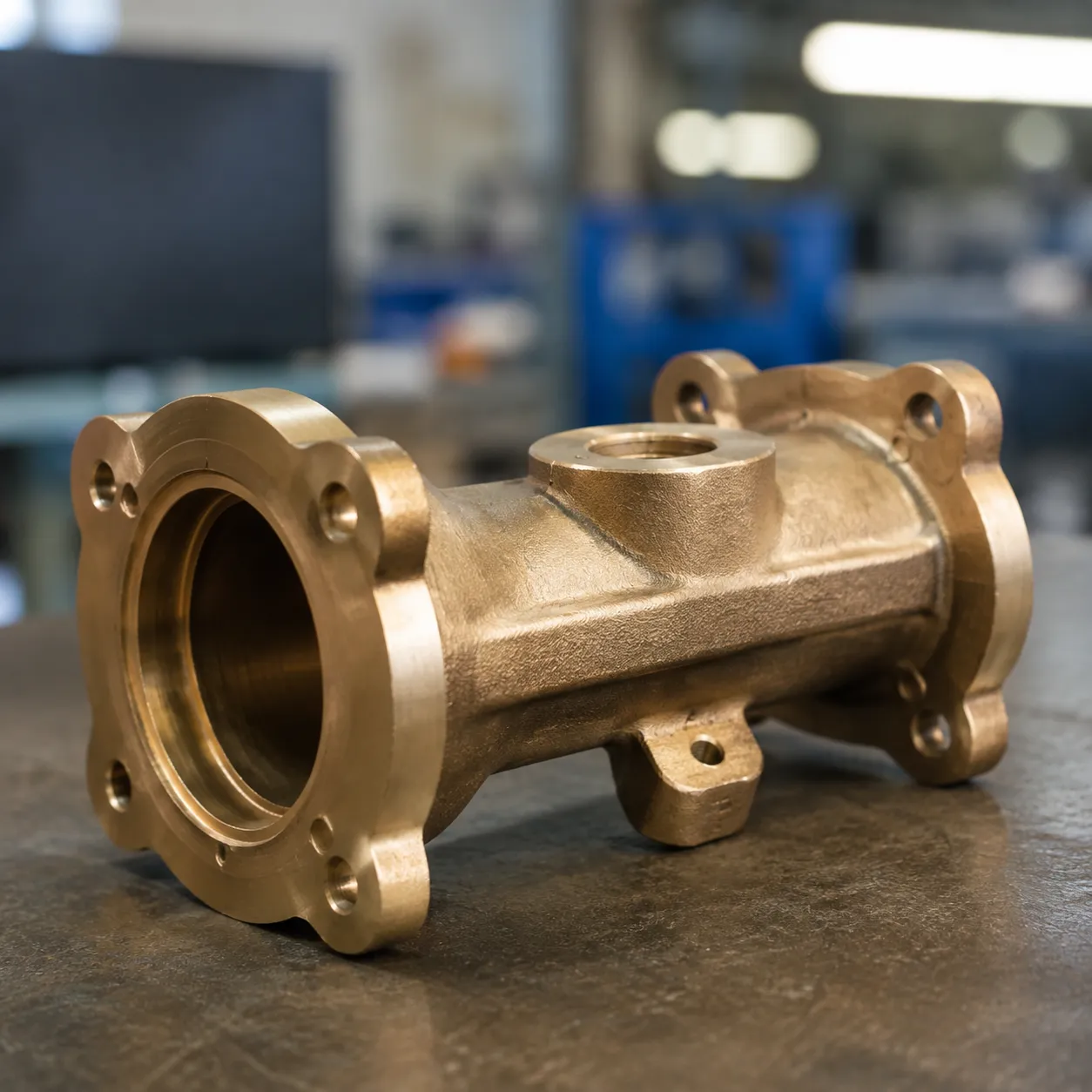
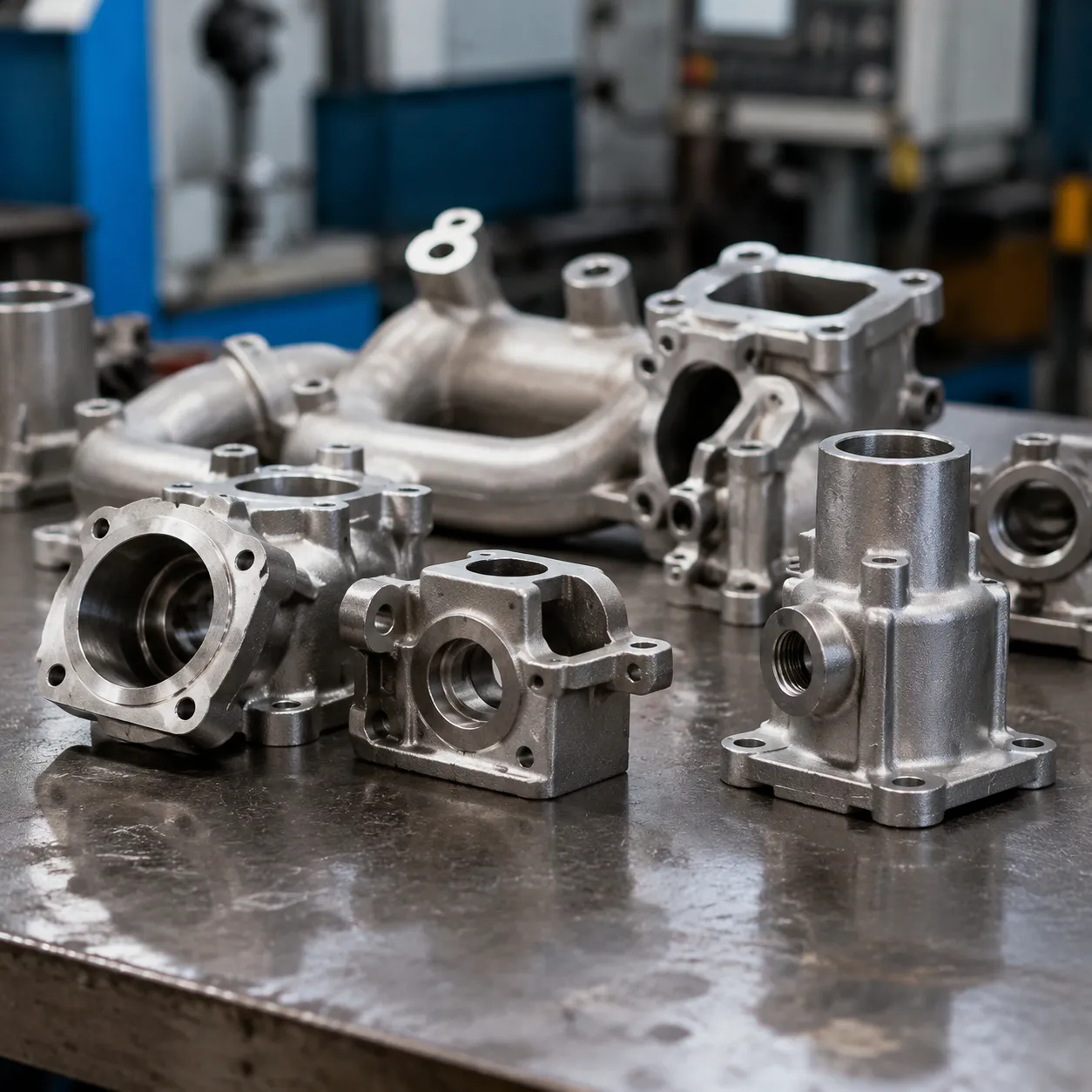
304 stainless steel investment casting produces near-net-shape CF-8 alloy components in 18/8 austenitic stainless steel, with ISO 8062-CT4 to CT6 linear tolerances, as-cast Ra 3.2–6.3 µm surfaces, wall thicknesses down to 1.5 mm, and optional solution annealing, CNC machining, and passivation for valves, food processing equipment, and aerospace components.
Chemical Composition and Material Properties of 304 Stainless Steel
Grade 304 (cast equivalent CF-8 alloy) is the benchmark material for industrial casting applications. Its balanced chromium-nickel matrix delivers excellent ductility, non-magnetic characteristics, and high mechanical strength across wide temperature ranges.
| Element / Property | Standard Range / Value | Feature Highlight |
|---|---|---|
| Chromium (Cr) | 18.0% – 20.0% | Forms a passive layer for oxidation and corrosion resistance |
| Nickel (Ni) | 8.0% – 10.5% | Stabilizes the austenitic structure and enhances toughness |
| Carbon (C) | ≤ 0.08% | Maintains weldability and mechanical integrity |
| Tensile Strength | ≥ 485 MPa | Provides structural reliability under mechanical load |
| Yield Strength | ≥ 205 MPa | Resists permanent deformation under operational stress |
The Precision Investment Casting (Lost Wax) Process
The lost wax casting method transforms complex CAD models into high-integrity alloy parts through a repeatable shell-molding process.
- Pattern Creation: Injection of liquid wax into precision tooling to form exact replicas of the target part.
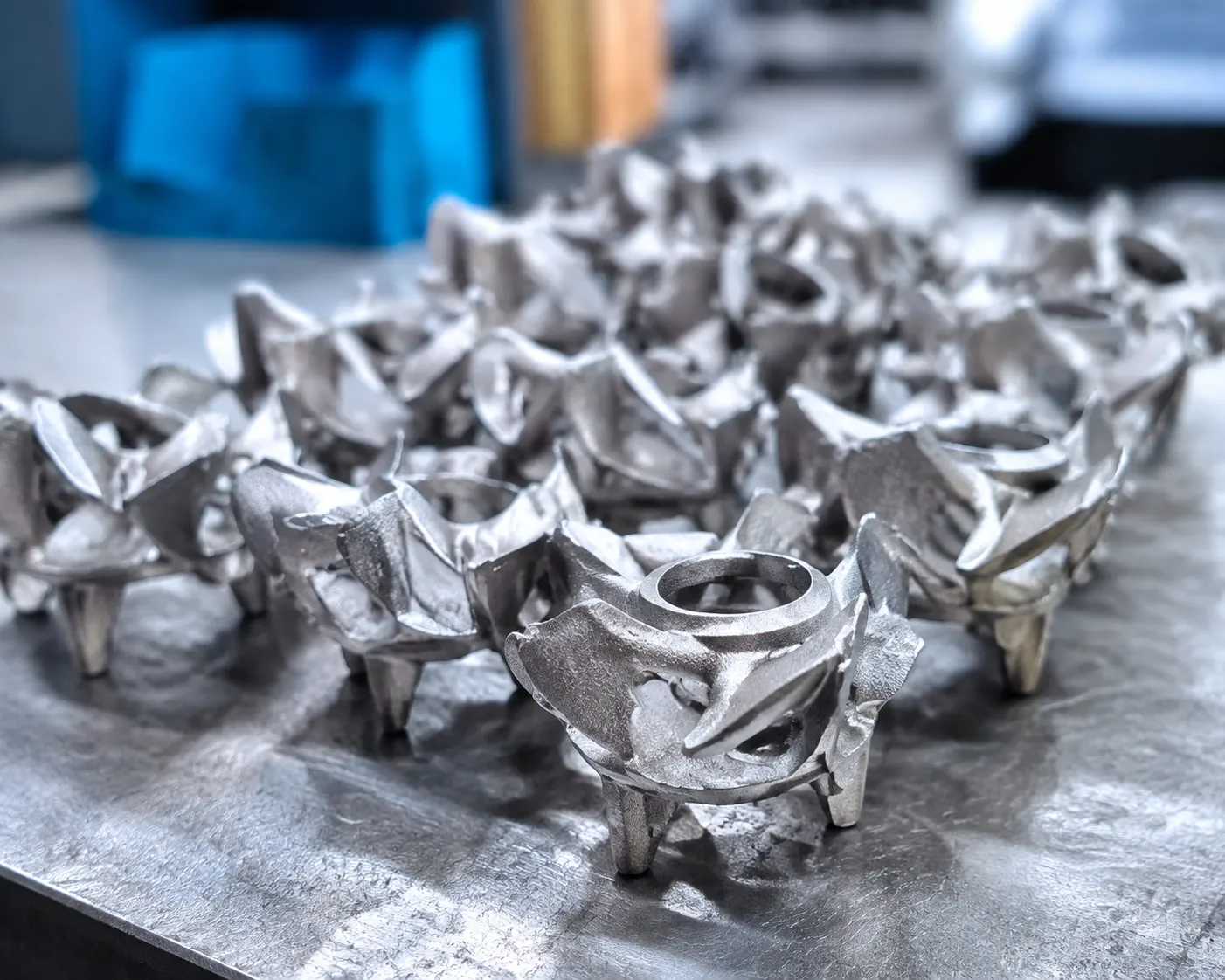
- Tree Assembly: Mounting multiple wax patterns onto a central runner to optimize material yield per heat.
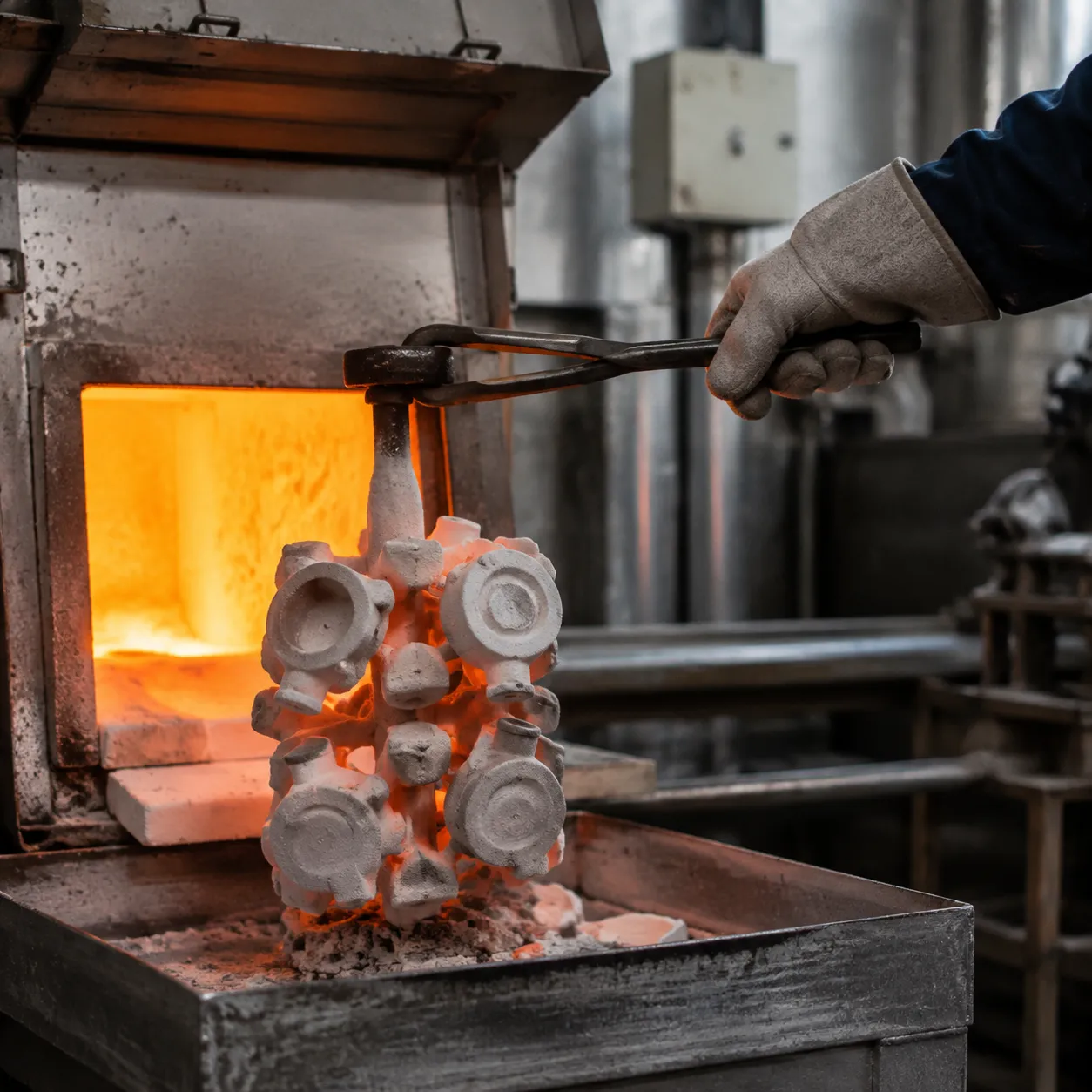
- Ceramic Shelling: Dipping the tree into refractory slurry and sand stucco layers to create a durable outer mold.
- Dewaxing & Firing: Autoclave heating melts out the wax, leaving a clean hollow cavity that is high-temperature fired.
- Pouring & Solidification: Molten 304 stainless steel is poured into the preheated shell under controlled thermal conditions.
- Shell Removal & Heat Treatment: Breaking away the ceramic shell, cutting off gates, and solution annealing parts to restore full microstructural corrosion resistance.
Key Differences Between 304 and Other Stainless Steel Grades
Selecting the optimal alloy requires balancing environment, mechanical demands, and overall project costs.
| Alloy Grade | Alloying Distinction | Key Advantages | Best Suited For |
|---|---|---|---|
| 304 (CF-8) | 18% Cr / 8% Ni | Cost-effective, excellent general corrosion resistance, highly formable | Standard valves, fittings, food hardware |
| 316 stainless steel (CF-8M) | Added 2%–3% Molybdenum | Superior resistance to chlorides, pitting, and harsh chemicals | Marine fittings, chemical processing |
| 410 / 420 | Martensitic / High Carbon | Heat-treatable to high hardness, strong wear resistance | Industrial blades, pump shafts, wear plates |
Key Benefits of 304 Stainless Steel Investment Castings
304 stainless steel investment casting solutions deliver exceptional material integrity and precision performance for demanding applications.
Superior Corrosion Resistance and Durability
As a versatile austenitic stainless steel (cast equivalent CF-8 alloy), 304 grade provides outstanding protection against oxidation, chemical exposure, and atmospheric corrosion.
- Oxidation Resistance: Withstands scaling at temperatures up to 870°C.
- Mechanical Strength: Maintains structural stability, high tensile strength, and impact toughness in harsh environments.
- Versatile Applications: Ideal for chemical handling, fluid control hardware, and components for food processing equipment.
High Dimensional Accuracy and Complex Geometries
Using the lost wax casting process, near-net-shape components are produced with intricate internal passages, thin walls, and tight tolerances that traditional forging or sand casting cannot achieve.
| Feature | Standard Capability | Key Benefit |
|---|---|---|
| Linear Tolerance | ISO 8062-CT4 to CT6 | Ensures precise fit and repeatable assembly |
| Wall Thickness | Down to 1.5 mm | Reduces part weight while maintaining strength |
| Geometric Complexity | Undercuts & internal channels | Combines multi-part assemblies into a single cast component |
Custom stainless steel castings streamline component designs and significantly lower overall production lead times.
Excellent Surface Finish and Reduced Machining Costs
Precision foundry techniques yield exceptionally smooth surface finishes directly out of the mold, drastically cutting the need for extensive post-processing.
- As-Cast Surface Roughness: Achieves Ra 3.2 - 6.3 µm (125-250 µin RMS) standard finish.
- Lower Material Waste: Reduces unnecessary metal removal, preserving raw material and extending tool life during final precision CNC machining.
- Lower Overall Cost: Minimizes labor-intensive finishing steps to deliver ready-to-use parts faster.
Custom 304 Stainless Steel Casting Capabilities
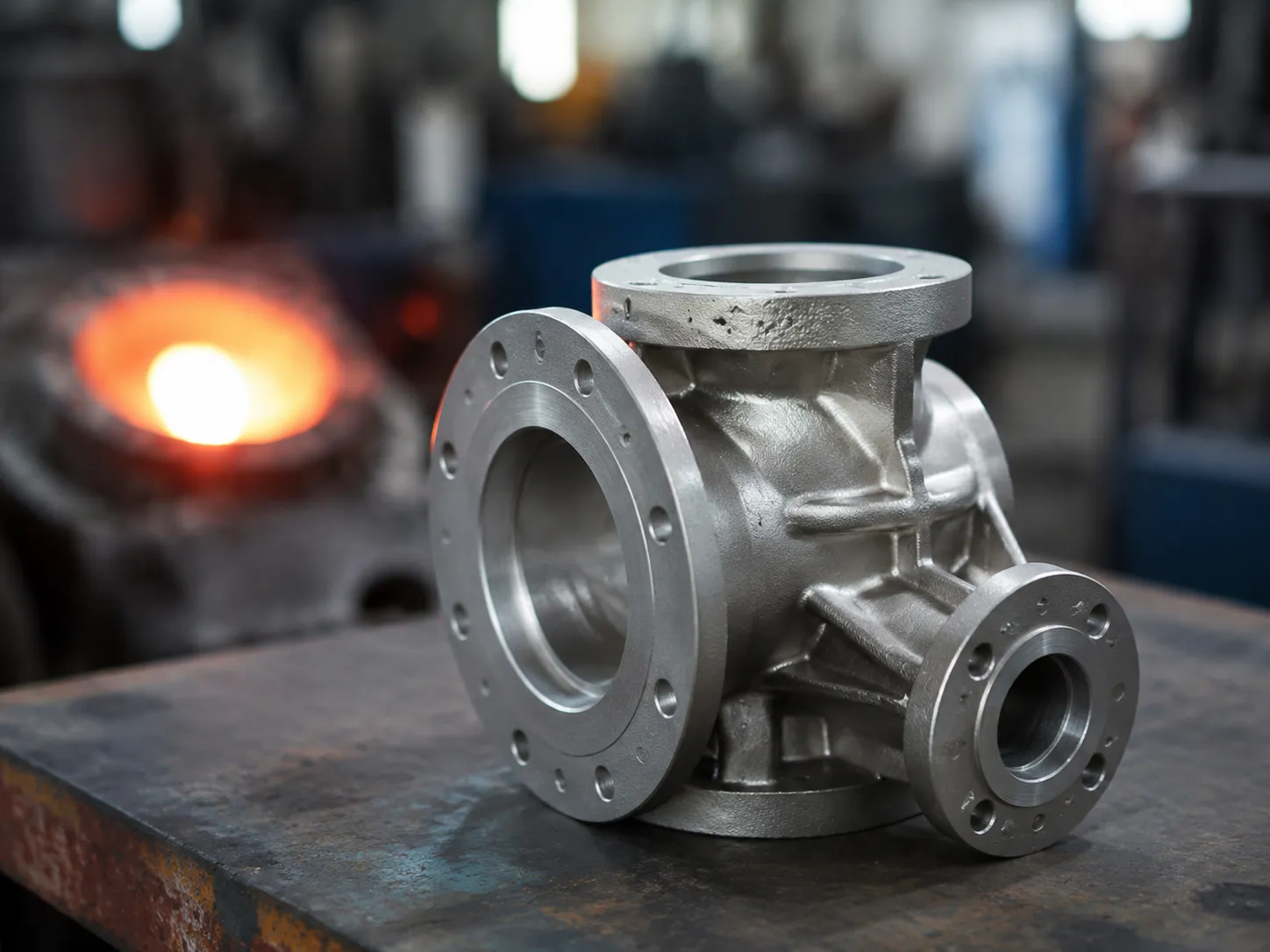
We provide end-to-end solutions for custom 304 stainless steel investment casting projects, moving your component from initial design to production-ready parts. Our foundry integrates advanced engineering and control processes to produce components that meet exact dimensional and metallurgical specifications.
Precision Design and Tooling Engineering
Our engineering team works directly with your 3D CAD files to optimize part geometry for the lost wax casting process. Early design analysis eliminates defects before production, saving time and tooling costs.
- Solidification Modeling: Simulation software identifies thermal behavior, shrinkage risk, and porosity potential prior to mold production.
- Custom Tooling Fabrication: High-precision aluminum dies manufactured in-house ensure dimensional consistency across high-volume production runs.
- Design for Manufacturability (DFM): Technical guidance on uniform wall thickness, draft angles, and core designs to maximize casting yield.
CNC Machining and Secondary Finishing
While investment casting produces near-net shapes, critical features often require tighter tolerances. We integrate full-service precision CNC machining to meet exact print requirements.
- Machining Capabilities: Multi-axis CNC milling, turning, drilling, tapping, and grinding for tight-tolerance features.
- Surface Finishing: Media blasting, electro-polishing, mirror polishing, and hand grinding to achieve target surface roughness (Ra) values.
- Sub-Assembly: Secondary joining, insert installation, and component assembly to streamline your supply chain.
Heat Treatment and Passivation Services
To maximize the mechanical properties and corrosion resistance of 304 stainless steel, we apply specialized post-casting treatments designed for harsh operating environments.
- Solution Annealing: Castings are heat-treated to dissolve free carbides back into the matrix, fully restoring the corrosion resistance of the austenitic stainless steel micro-structure.
- Chemical Passivation: Acid bath treatments eliminate surface free iron, establishing a passive chromium oxide film across all surfaces.
- Quality Verification: Hardness testing, grain size verification, and chemical analysis confirm proper heat treatment execution.
Industries Served for 304 Stainless Steel Castings
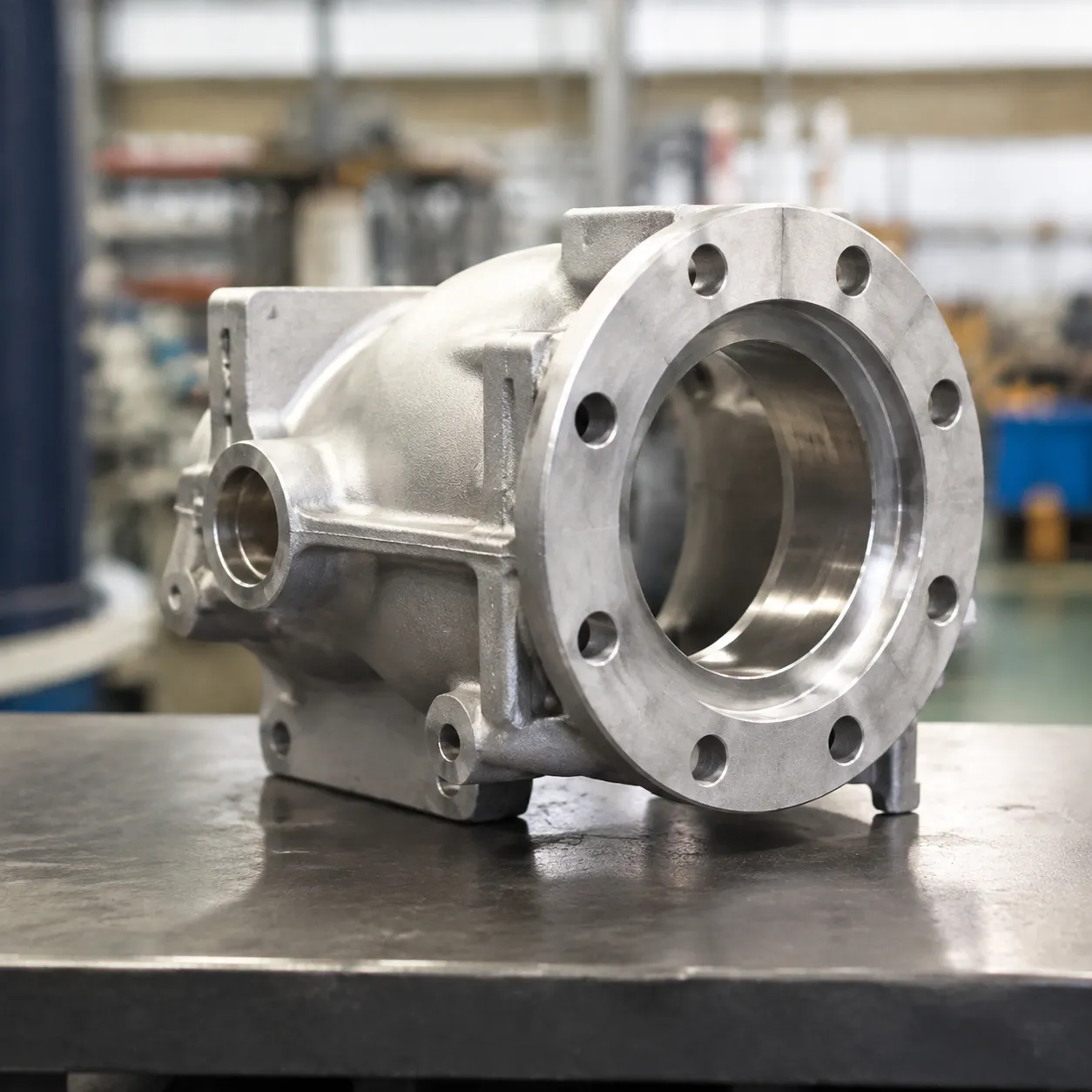
We supply high-precision 304 stainless steel investment casting solutions engineered to meet rigorous performance standards across diverse global industries.
Food Processing and Beverage Equipment
Austenitic stainless steel is the global benchmark for hygienic processing equipment due to its exceptional corrosion resistance and non-reactive surface. Our lost wax casting process creates smooth, pit-free components that withstand daily sanitation procedures and harsh cleaning chemicals.
- Key Parts: Sanitary valve bodies, pump impellers, mixer blades, and pipe couplings.
Aerospace and Defense Applications
Strict dimensional tolerances and total structural integrity make 304 stainless steel investment casting essential for critical defense and commercial systems. We manufacture high-reliability aerospace components designed to withstand extreme vibration and environmental stress.
- Key Parts: Structural mounting brackets, sensor housings, latch mechanisms, and fluid control bodies.
Marine, Chemical, and Industrial Machinery
Heavy industrial applications require materials that resist oxidation, rust, and chemical exposure. We pour high-density 304 stainless steel castings engineered to maintain mechanical strength and corrosion resistance in aggressive liquid and marine environments.
- Key Parts: Chemical pump housings, flowmeter bodies, marine deck hardware, and heavy-duty valve actuators.
Medical and Automotive Components
Modern medical devices and custom vehicle builds demand high material purity and precision geometries. We produce intricate parts for specialized medical equipment and high-performance automotive aftermarket applications requiring heat and rust resistance.
- Key Parts: Surgical tool handles, diagnostic device frames, exhaust flanges, and turbocharger brackets.
Quality Control and Compliance Standards
We enforce rigorous quality assurance at every step of our 304 stainless steel investment casting process. Our foundry guarantees that every component meets strict dimensional tolerances, chemical compositions, and mechanical requirements.
Material Spectrochemical and Mechanical Testing
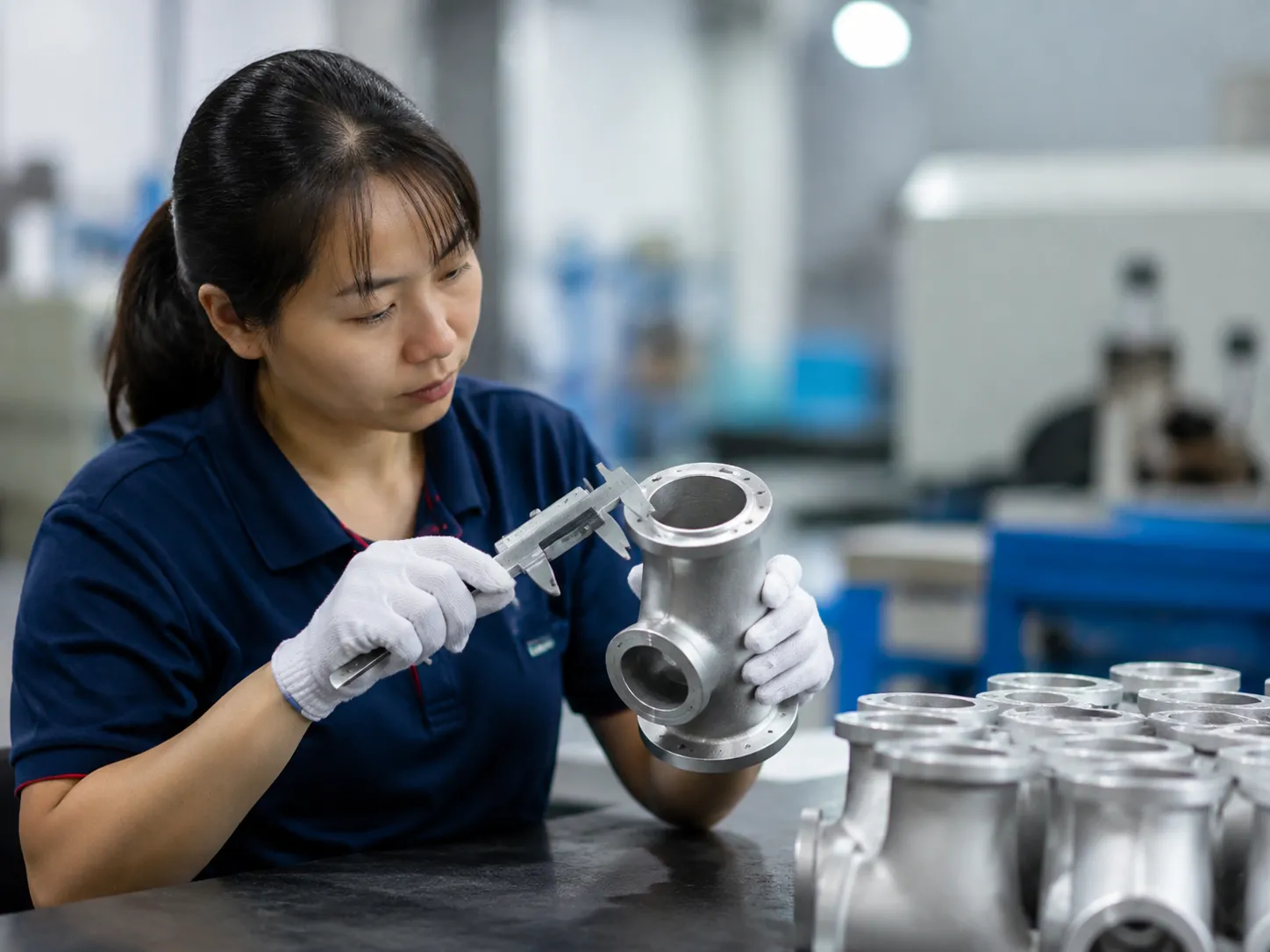
We verify every melt of austenitic stainless steel before pouring to ensure complete material integrity. Using optical emission spectrometers, we confirm exact elemental balances for 304 grade (CF-8 alloy) components.
- Spectrochemical Analysis: Verifies essential Chromium (18–20%) and Nickel (8–10.5%) levels to ensure optimal corrosion resistance.
- Mechanical Testing: Validates tensile strength, yield strength, hardness, and elongation metrics.
- Material Traceability: Our advanced testing facilities provide complete heat-lot traceability and raw material certification for every batch.
Non-Destructive Testing (NDT) and Dimensional Inspection
To ensure internal soundness and precise geometry without damaging finished castings, we utilize targeted non-destructive evaluation and automated inspection tools.
| Inspection Method | Tool / Process | Target Quality Metric |
|---|---|---|
| Surface Inspection | Liquid Penetrant Testing (LPT) | Identifies micro-cracks, pinholes, and surface porosity |
| Internal Structural Audit | Radiographic / X-Ray Testing | Detects subsurface shrinkage and gas voids |
| Dimensional Verification | Coordinate Measuring Machine (CMM) | Validates tight dimensional tolerances against original 3D CAD models |
ISO Certifications and Industry Compliance
Our precision foundry operates under standardized manufacturing management systems to deliver reliable 304 stainless steel castings for mission-critical applications.
- Quality Management: Operating in full alignment with ISO 9001 quality management benchmarks.
- Material Standards: Compliant with international specifications including ASTM A351, ASTM A743, and DIN standard requirements.
- Verified Standards: Review our full list of quality certifications to see how we maintain global regulatory compliance.
Design Guidelines and Quote Inputs for 304 Stainless Steel Investment Casting
Launching a new 304 stainless steel investment casting project requires clear communication between your design team and our foundry engineering staff. By optimizing your component design early, we streamline production, reduce material waste, and deliver high-precision parts faster.
Design Guidelines for Investment Casting
Designing parts specifically for the lost wax process minimizes secondary machining and cuts down production cycles. Following these core guidelines ensures superior structural integrity for every 304 stainless steel investment casting:
- Wall Thickness: Maintain a uniform wall thickness whenever possible. The recommended minimum wall thickness is 0.060 inches (1.5 mm) to ensure proper liquid metal flow throughout the ceramic shell.
- Fillets and Radii: Avoid sharp corners. Incorporate generous radii (minimum 0.030 inches / 0.75 mm) to distribute stress evenly and eliminate potential hot spots during cooling.
- Draft Angles: Unlike sand casting, the precision investment casting process requires minimal to zero draft angles on internal and external features.
- Tolerances: Standard linear tolerances are ±0.005 inches per inch, providing near-net-shape components straight out of the mold.
Factors Influencing 304 Stainless Steel Casting Costs
Understanding the primary cost drivers helps you optimize your design for budget efficiency without sacrificing mechanical performance or corrosion resistance.
| Cost Driver | Key Consideration | Optimization Tip |
|---|---|---|
| Tooling & Die Design | Initial investment in aluminum wax injection dies. | Simple geometries reduce initial tooling expense. |
| Part Geometry & Cored Features | Complex internal passages require soluble ceramic cores. | Consolidate multi-part assemblies into a single casting. |
| Secondary Operations | Tight-tolerance CNC machining, solution annealed heat treatment, or surface polishing. | Design critical surfaces to near-net dimensions to reduce machining passes. |
| Order Volume | Setup times and mold preparation overhead. | Larger batch runs significantly reduce the cost per casting. |
Requesting a Custom Quote from Our Foundry
We make the quotation process fast and straightforward. Submitting a complete project packet allows our engineering team to evaluate your component's castability and provide an accurate quote quickly. Contact us with drawings and alloy requirements to start the review.
- 3D CAD Models & 2D Drawings: Provide STEP, IGES, or SolidWorks files along with 2D PDFs highlighting critical dimensions and tight tolerances.
- Material Specifications: Specify 304 stainless steel (CF-8 alloy) along with any custom chemical or mechanical strength requirements.
- Quality & Inspection Criteria: Detail any required Non-Destructive Testing (NDT), such as X-ray, dye penetrant inspection, or material spectrochemical certifications.
- Volume Expectations: Include estimated annual volume (EAV) and initial sample submission batch sizes.