
High-Precision Cast & Machined Aluminum Alloys for Automotive & OEM Programs
Single-source production of aluminum investment casting blanks and in-house CNC machining. Eliminate multi-vendor handoff risks, shrink lead times, and optimize component costs under one roof.
Cast + Machined Tolerance
Achieve ultra-tight dimensional precision down to ±0.01 mm for critical OEM interfaces.
Minimum Wall Thickness
Cast complex, lightweight structural geometries down to 2.5 mm minimum wall thickness.
T6 Solution & Aging Coverage
Fully integrated heat treatment ensures maximum tensile strength and fatigue performance.
Cast Aluminum Grade Matrix & Mechanical Properties
Selecting the optimal formulation from the family of Al-Si casting alloys is critical for balancing tensile strength, fatigue endurance, and precision machineability. VastCasting manufactures high-integrity aluminum investment casting blanks using strictly controlled melt chemistries compliant with ASTM B618 and ASTM B108 standards, supported by in-house T6 solution and artificial aging heat treatments. In addition to aluminum, we manufacture specialized stainless-steel-castings for demanding structural applications.
| Alloy Grade | ASTM / UNS Standard | Tensile Strength (MPa) | Yield Strength (MPa) | Elongation (%) | Hardness (HBW) | Primary Process |
|---|---|---|---|---|---|---|
| A356.0 - T6 Recommended | ASTM B618 / UNS A03560 | 290 – 330 | 220 – 250 | 3.5 – 6.0 % | 80 – 90 | Investment & Permanent Mold |
| AlSi10Mg - T6 | ASTM B618 / UNS A03600 | 300 – 340 | 230 – 260 | 2.5 – 4.5 % | 85 – 95 | Thin-Wall Fluid Enclosures |
Structural Benefits of A356-T6 in Lightweight Automotive Components
As the premier choice for high-stress structural components, A356 aluminum casting provides an optimal balance of molten fluidity, pressure tightness, and fracture toughness. Formulated with approximately 7.0% silicon and 0.35% magnesium, A356 develops a dense microstructural framework capable of filling complex investment casting geometries with wall thicknesses down to 2.5 mm while preventing shrinkage porosity and hot tearing.
Executing a rigorous A356.0 T6 heat treatment—involving solution heat treatment at 540°C, precise water quenching, and artificial aging at 155°C—precipitates magnesium silicide (Mg2Si) intermetallics across the matrix. This thermal processing substantially elevates yield strength and cyclic fatigue limits, making cast A356-T6 the benchmark material for automotive gearbox housings, turbocharger brackets, fluid heat exchangers, and high-performance chassis mounts. Beyond standard aluminum options, we also engineer superalloy-high-temp-castings for extreme thermal environments.
Key Advantages of Al-Si Investment Casting Alloys:
- ✓ Optimized Strength-to-Weight Ratio: Cuts component mass by up to 45% compared to ductile iron castings without compromising mechanical stiffness under high cyclic loads.
- ✓ Superior Mold Fluidity: Enables intricate internal flow channels and complex undercuts that cannot be economically machined directly from billet stock. For specialized fluid control applications, explore our high-precision valve-body-fittings.
- ✓ Corrosion Resistance: Generates a protective natural oxide layer, safeguarding parts against aggressive automotive fluids and environmental oxidation.
Melt-Heat Traceability & ASTM Compliance
VastCasting enforces strict chemical spectrum monitoring using in-house Optical Emission Spectrometry (OES) before pouring every melt heat. Iron content is capped below 0.12% to eliminate brittle intermetallic phases, maintaining high ductility and impact absorption across cast aluminum alloys.
Need Material Specification Sheets or DFM Guidance?
Download our comprehensive aluminum alloy datasheets or consult with VastCasting metallurgical engineers for material selection and DFM optimization on your CAD drawings.
Process Comparison: Precision Cast + CNC vs. Billet Machining
Evaluating the transition from raw billet CNC machining to near-net investment casting combined with CNC finishing is a key financial lever for OEM engineering teams. While billet machining excels in early-stage prototyping, investment cast aluminum blanks eliminate excessive material waste, bypass tool path restrictions, and dramatically compress unit costs as production volume grows.
Precision Investment Cast + CNC
Near-net shape aluminum investment casting creates complex geometric contours before high-precision CNC equipment executes tight-tolerance sealing surfaces and threaded ports.
- Material Utilization >90% Near-net blanks pour liquid metal into exact ceramic shell profiles, eliminating raw material waste and reducing aluminum alloy purchase costs.
- Unrestricted Cavity Complexity Easily accommodates internal fluid channels, deep undercut chambers, and thin cooling fins that continuous tool paths cannot reach.
- Low Mass-Production Unit Cost Minimal tool engagement time and short machine cycles reduce unit costs by 35% to 50% on medium and high-volume orders.
- Strict Internal Integrity In-house degassing, T6 solution heat treatment, and digital X-ray inspection yield dense, pressure-tight components.
Higher upfront tooling, offset rapidly by minimal scrap metal losses and reduced spindle hours.
Extrusion / Billet CNC Machining
Milling components directly out of solid extruded aluminum blocks or plates. Excellent for fast initial proof-of-concept prototypes before tooling investments are made.
- Severe Material Waste (60% – 80%) Machining complex hollows turns the vast majority of expensive raw alloy blocks into low-value aluminum scrap chips.
- Restricted Geometry & Deep Cavities Internal geometry is constrained by tool reach, axis angles, and cutter vibration, forcing multi-piece welded assemblies.
- High Machine Hour Costs & Tool Wear Prolonged hogging operations accelerate end-mill wear and tie up expensive multi-axis machining centers.
- Strict Batch Constraints Best reserved for ultra-low volume prototypes (<10 pieces) or customized architectural extrusions with simple cross-sections.
Zero initial tooling expense, but unit price remains static and high regardless of quantity growth.
Production Run Volume vs. Unit Savings
Adjust the order volume slider to visualize how near-net investment casting cuts unit costs compared to hogging parts from solid billet stock.
Raw Material Efficiency & Scrap Economics
Direct billet machining of volumetric automotive parts requires purchasing large solid aluminum alloy blocks. When hollow chambers, cooling jackets, or deep pockets are milled, over 70% of that paid-for metal is reduced to scrap chips. In contrast, investment casting pours molten A356 or A357 aluminum into ceramic molds matched precisely to the final component geometry. Material utilization consistently exceeds 90%, insulating procurement budgets from raw metal market spikes.
Machining Center Capacity & Spindle Wear
Machining a part entirely from solid billet ties up multi-axis CNC milling centers for hours. Heavy material removal causes rapid end-mill degradation, frequent tool offsets, and higher electrical consumption. By switching to investment cast blanks, CNC machines are reserved strictly for precision finishing—such as boring seal pockets, tapping threads, and facing mating flanges. Machine spindle cycle times drop from hours to minutes, freeing up machine hours for higher throughput.
Structural Design Freedom & Internal Voiding
Billet machining is physically constrained by line-of-sight tool access. Complex internal fluid channels or curved undercut cavities require split-body designs, complex O-ring channels, or secondary welding steps. Investment casting uses soluble wax cores to form intricate internal passages, undercut pockets, and smooth internal radius curves in a single monolithic cast structure. For extreme performance environments requiring superalloy high temp castings, this approach eliminates secondary leak paths and improves mechanical fatigue resistance.
Technical Specification & Economic Metrics
Direct engineering comparison between investment cast blanks with finished CNC machining vs. raw billet milling.
| Evaluation Parameter | Precision Investment Cast + CNC | Direct Billet / Extrusion CNC |
|---|---|---|
| Raw Material Utilization Rate | 90% – 95% (Near-net shape) | 20% – 40% (Excess chip waste) |
| Internal Geometry Capabilities | Complex fluid cavities & undercuts via wax cores | Restricted to cutter reach & axis lines |
| Average CNC Machine Time Per Part | Fast (Only critical surfaces finished) | Slow (Full block material removal) |
| Initial Tooling Investment | Moderate (Aluminum wax injection mold) | Zero tooling required |
| Unit Price Scaling at >100 Units | 35% – 50% Savings per unit | High static cost curve |
| Heat Treatment Flexibility | 100% In-house T6 Solution & Aging coverage | Limited by raw stock temper state |
Dual Manufacturing Capabilities Under One Roof
Because VastCasting operates dedicated investment casting foundries alongside advanced multi-axis CNC machining centers, our engineering team provides objective, unbiased manufacturing advice. We review your CAD drawings and production forecasts to recommend the exact process path—whether raw billet machining or investment cast blanks—that optimizes piece price, structural integrity, and lead times.
Target Applications for Precision Aluminum Alloys
VastCasting produces high-precision cast and CNC-machined aluminum components engineered for demanding operating environments across the automotive, powertrain, fluid power, and industrial machinery sectors. By combining near-net-shape aluminum investment casting with single-facility secondary CNC finishing, we manufacture lightweight, defect-free parts that withstand intense mechanical loads, severe thermal shock, and high hydraulic pressure. Global Tier-1 automotive suppliers and performance aftermarket brands rely on VastCasting for single-source component manufacturing from raw melt to fully inspected finished assemblies.
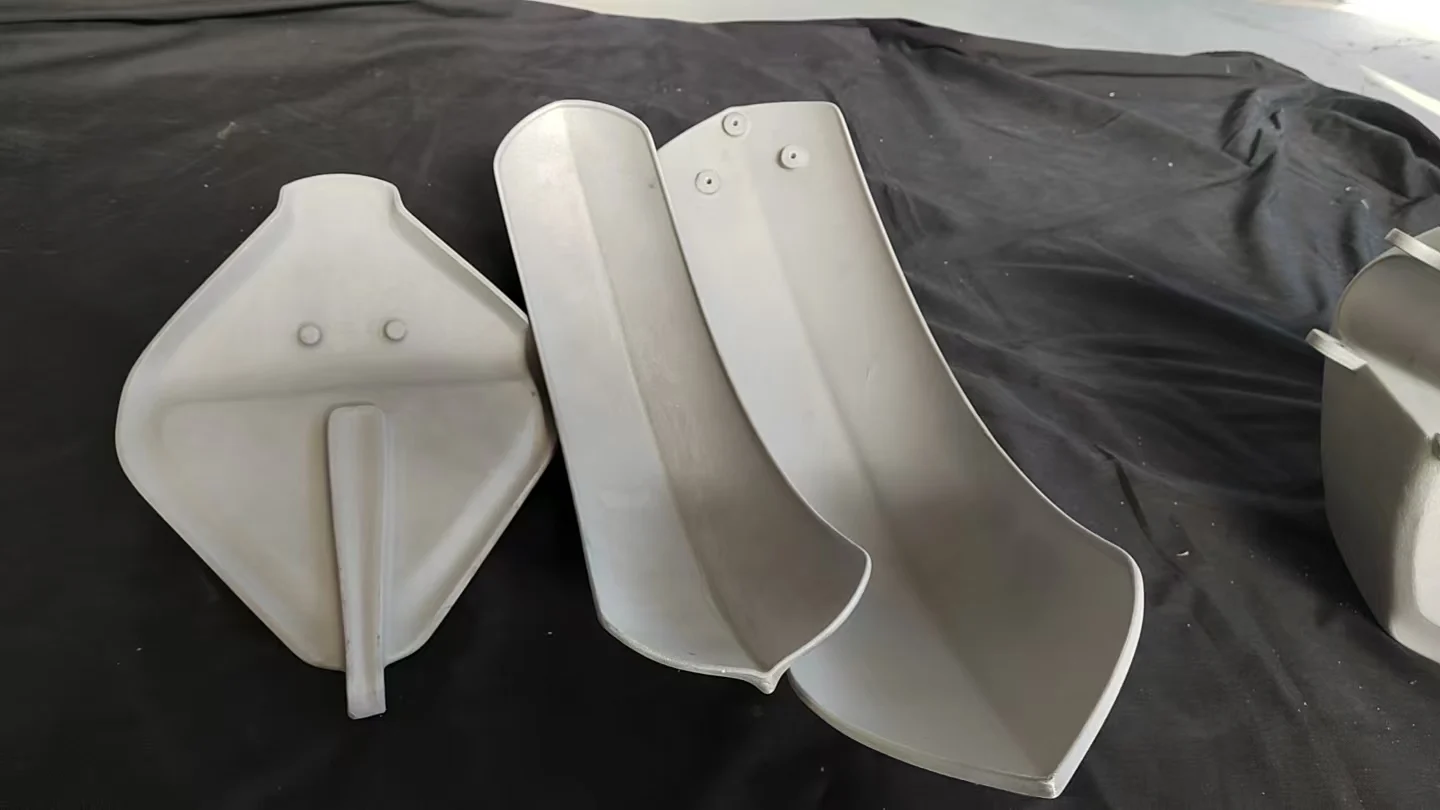
Gearbox & Exhaust Systems
Severe-duty aluminum automotive casting assemblies designed to endure extreme thermal cycling, powertrain vibration, and elevated torsional loads while reducing total vehicle weight. Beyond aluminum, we also specialize in superalloy high-temp castings that serve as performance highlights in extreme thermal environments.
- Gearbox Housing Casting: High-density cast transmission housings with integrated stiffening ribs for maximum flexural rigidity and noise reduction.
- Exhaust Manifold Casting Brackets: Thermal fatigue-resistant brackets built to prevent structural distortion under 600°C shock cycles.
- Heat Shield & Transfer Mounts: Thin-wall investment cast mounting structures engineered down to 2.5 mm wall thickness.
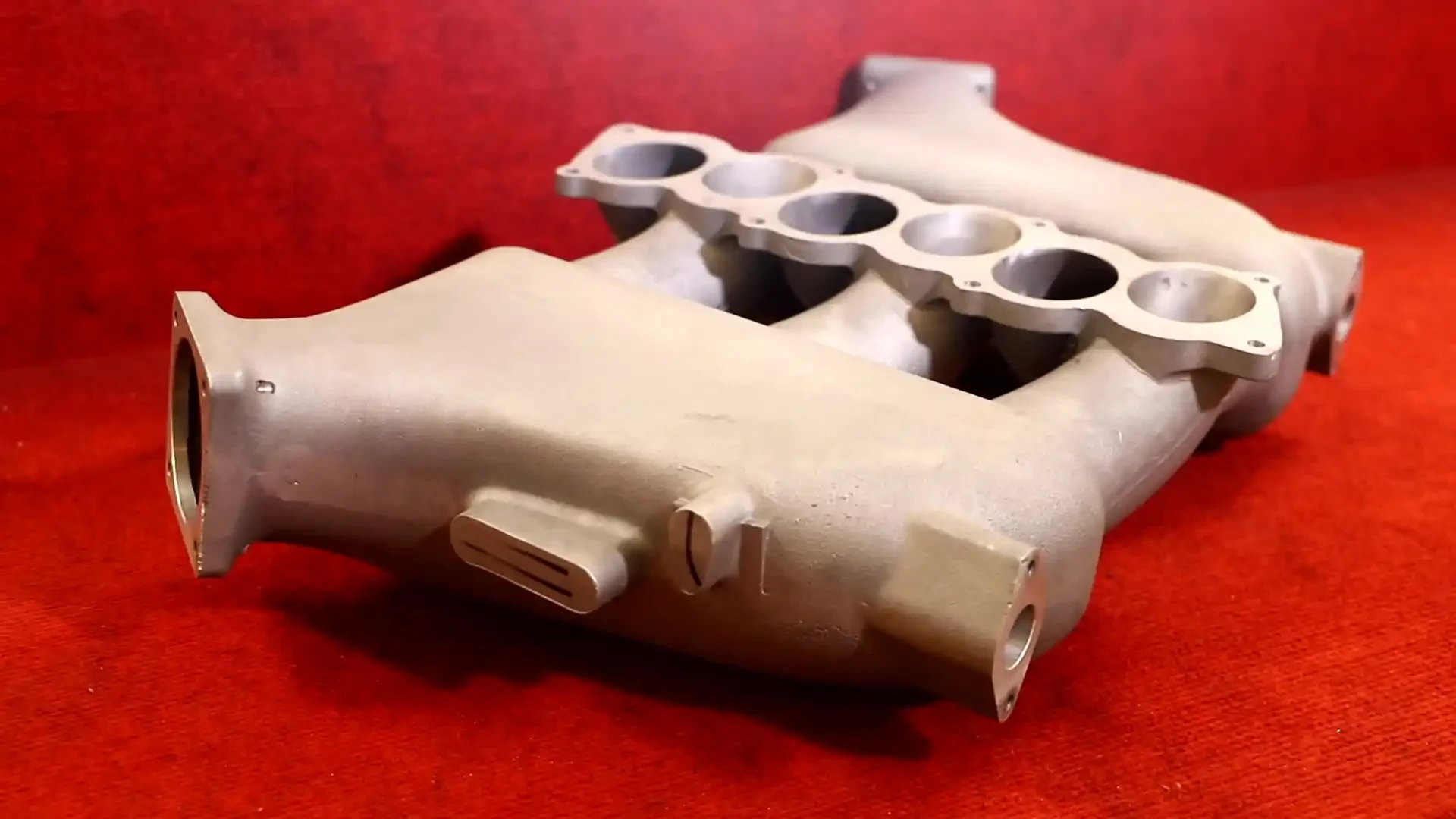
Automotive Tuning & Performance
Precision-machined aftermarket performance parts designed to optimize intake airflow velocity, increase thermal transfer rates, and endure severe track vibrations.
- Performance Intake Manifolds: Smooth internal runner geometry investment cast with optimized curvature for maximum volumetric efficiency.
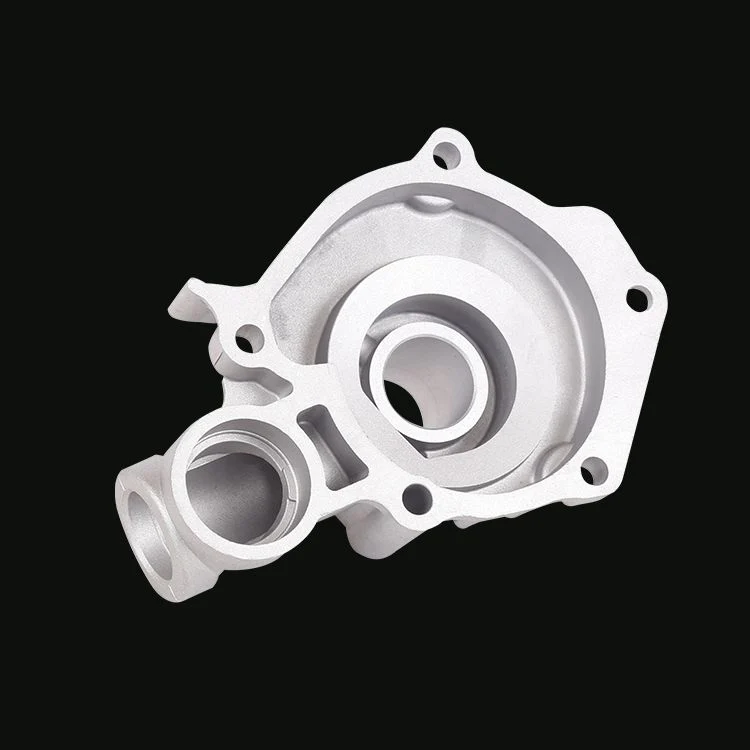
- Cooling Water Neck Adapters: Leak-free cast aluminum fluid fittings engineered for high-pressure motorsport radiator setups.
- Race Chassis & Engine Mounts: High-yield structural mounts providing rigid component placement while eliminating heavy steel weldments.
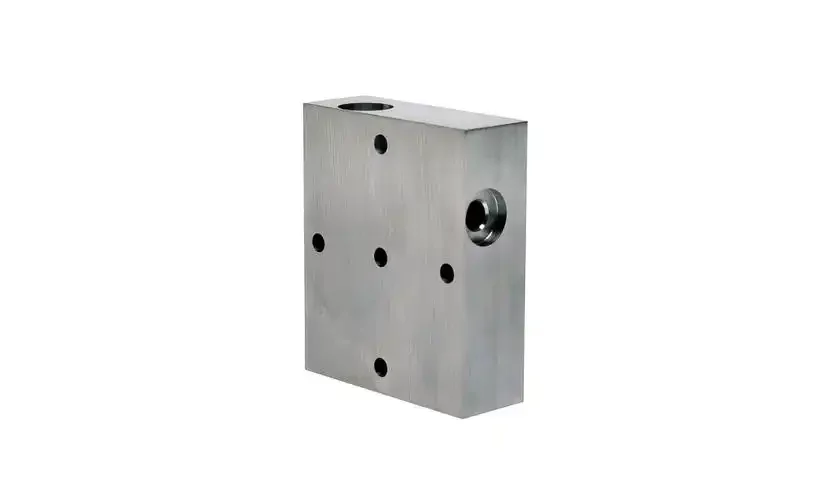
Fluid & Enclosure Components
Impermeable, pressure-dense cast aluminum valve body fittings and sealed control unit housing boxes engineered for severe hydraulic and industrial applications.
- Multi-Port Hydraulic Valve Blocks: Complex internal flow channels investment cast near-net-shape with zero internal porosity or inclusions.
- Heat-Dissipating ECU Enclosures: Integrated external cooling fins cast directly into protective controller housing boxes.
- Sealed Pump Bodies & Manifolds: Pressure-tested aluminum castings engineered for zero leakage across fluid power cycles.
Engineering Precision for High-Stress Automotive and Hydraulic Environments
Modern automotive programs, performance powertrain platforms, and industrial fluid power systems demand structural components that balance lightweight characteristics with extreme mechanical reliability. Traditional gray cast iron offers adequate strength but adds significant dead weight to vehicle assemblies, negatively impacting fuel economy, acceleration dynamics, and front-to-rear axle load balance. Conversely, hogging out complex components entirely from solid aluminum billet raw stock results in up to 80% material waste and excessive machine-hour overhead.
VastCasting resolves this engineering trade-off by supplying near-net-shape aluminum automotive casting blanks precision-machined under one roof. Utilizing high-purity A356.0 aluminum-silicon casting alloy subjected to rigorous T6 solution heat treatment and artificial aging, our structural cast components achieve tensile strengths exceeding 290 MPa and yield strengths above 220 MPa while achieving up to 40% mass reduction compared to cast iron components.
Severe-Duty Thermal & Structural Advantages
- · Superior Thermal Dissipation: High thermal conductivity of Al-Si casting alloys guarantees rapid heat transfer in complex gearbox housing casting and power electronics enclosures.
- · Thermal Shock Resistance: Refined eutectic microstructure prevents micro-cracking during rapid temperature fluctuations, ideal for exhaust manifold casting brackets and turbocharger mounts.
- · Internal Passageway Integration: Investment casting forms curved internal cooling passages and hydraulic channels that are cost-prohibitive or physically impossible to CNC machine from solid block.
Comprehensive Quality Control & Traceability
- · Optical Emission Spectrometry (OES): 100% raw chemical composition verification for every melt furnace heat per ASTM B618 and ASTM B108 standards prior to pouring.
- · Non-Destructive X-Ray Radiography: Industrial digital X-ray inspection screens internal casting walls to guarantee zero gas porosity, shrinkage, or inclusions.
- · Precision CMM Inspection: Dedicated Coordinate Measuring Machines verify tight critical dimensions and geometric tolerances down to ±0.01 mm on key CNC machined features.
Whether you are launching a prototype batch for motorsport performance parts or scaling high-volume OEM production for transmission housings and multi-port valve bodies, VastCasting delivers full-service engineering support—including DFM optimization, rapid wax patterns, custom mold tooling, T6 heat treatment, and precision CNC finishing.
Integrated Quality Assurance & T6 Heat Treatment
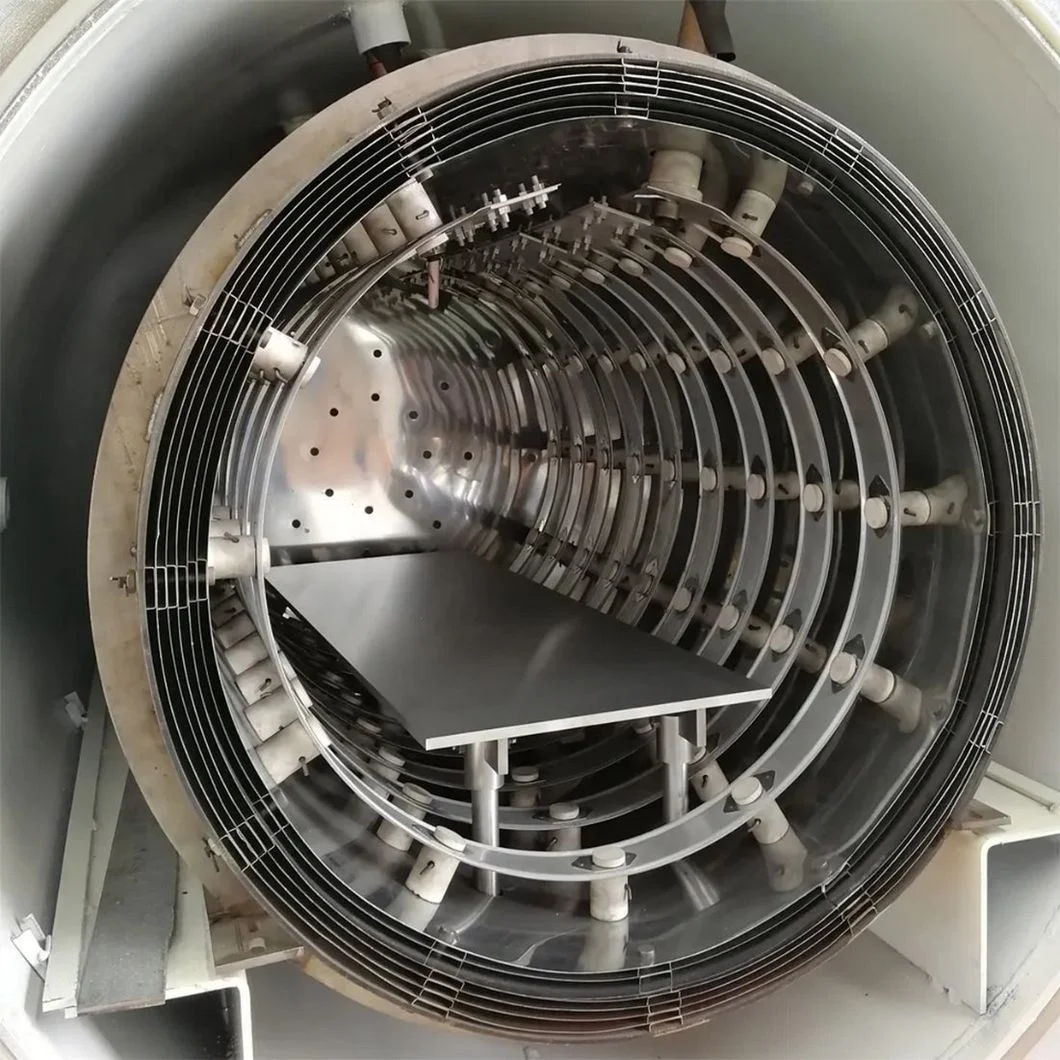
VastCasting operates in-house T6 heat treatment aluminum furnaces and digital x-ray defect testing aluminum inspection lines, ensuring zero internal porosity and peak mechanical strength for critical OEM applications and high-precision aluminum components.
Spectrometer Chemistry Analysis
Optical emission spectrometry provides real-time in-melt chemical verification to guarantee strict alloy composition before pouring.
In-House T6 Heat Treatment
Precision solutionizing and artificial aging optimize tensile strength and material hardness for demanding T6 heat treatment aluminum specs.
X-Ray Inspection & CMM
Non-destructive x-ray defect testing aluminum scans detect internal shrinkage, while automated CMM systems confirm ±0.01mm tolerances for complex aerospace energy components.
Air Leakage & Pressure Testing
Hydrostatic and pneumatic decay testing verify 100% leak-free integrity for pressurized valve body fittings and liquid cooling cavities.
In-House Precision Metrology & Zero-Defect Assurance
By combining automated T6 solution heat treatment with digital non-destructive testing on-site, VastCasting eliminates subcontracting delays and delivers reliable, ready-to-assemble aluminum castings that satisfy rigorous automotive and industrial OEM requirements.
Aluminum Alloy Investment Casting FAQ
Get authoritative engineering answers regarding aluminum investment casting specifications, cast aluminum tolerances, CNC machining capabilities, heat treatment, and converting billet CNC parts to cost-effective cast blanks.
What are the main benefits of aluminum investment casting vs. high-pressure die casting?
Aluminum investment casting and high-pressure die casting serve distinct engineering and manufacturing requirements. Precision investment casting using silica sol shell molding excels in internal density, structural integrity, and complex geometry customization.
- Minimal Internal Porosity: Investment casting creates dense, non-porous microstructures ideal for pressure-tight valve body fittings, turbocharger components, and fluid manifolds.
- Full T6 Heat Treatment Support: Unlike high-pressure die castings that blister at elevated temperatures due to trapped gas pockets, investment cast Al-Si casting alloys fully undergo A356.0 T6 solution and aging heat treatments to reach peak mechanical strength.
- Lower Tooling Investment: Tooling costs for investment casting dies are a fraction of massive die-casting tooling, making it the most economical choice for small to mid-volume production (50 to 10,000 units annually).
- Thick Wall Section Flexibility: The investment casting process easily fills heavy wall sections without sink marks or internal shrinkage voids, supporting robust automotive brackets and structural housings.
What are VastCasting's minimum wall thickness and cast aluminum tolerances?
VastCasting integrates silica sol investment casting with secondary in-house CNC machining under one roof, guaranteeing strict geometric accuracy from raw cast blank to finished component.
- Cast Minimum Wall Thickness: Reaches down to 2.5 mm (0.098 in) on localized structural ribs and thin web sections, allowing lightweighting without sacrificing molten metal fluidity or shell filling.
- As-Cast Dimensional Tolerances: Raw cast blanks strictly adhere to ISO 8062-CT5 to CT6 standards, ensuring predictable machining stock allowance across critical mounting faces.
- Precision CNC Machining Tolerances: In-house multi-axis CNC milling and turning centers achieve tight tolerance features down to ±0.01 mm (±0.0004 in) for valve spools, bearing bores, and precision seal grooves.
- Surface Quality: As-cast surface finish averages Ra 3.2–6.3 µm, while precision CNC milled and turned surfaces reach Ra 0.8–1.6 µm for critical contact areas.
Can VastCasting assist in converting raw billet CNC parts into investment casting designs?
Yes. Converting components from raw billet CNC machining or extrusion stock into near-net shape investment cast blanks with target CNC finishing is one of VastCasting's primary core competencies.
When production runs exceed 50 to 100 units, machining an entire part out of solid aluminum billet creates massive material waste—converting up to 80% of expensive stock into scrap chips—and consumes substantial machine hours.
- Material Utilization: Near-net shape casting increases raw material utilization to over 90%, significantly lowering raw stock procurement costs.
- Substantial Cost Savings: Total unit production costs drop by 35% to 50% due to reduced CNC spindle time, minimized tool wear, and accelerated throughput.
- Turnkey DFM Guidance: VastCasting's engineering team provides complimentary Design for Manufacturability (DFM) analysis to optimize wall transitions, establish optimal draft angles (0.5° to 1.5°), and streamline post-cast machining setups.
Which aluminum alloy grades are offered and how is T6 heat treatment controlled?
VastCasting specializes in high-strength aluminum-silicon casting alloys designed for demanding mechanical, thermal, and structural applications across automotive and industrial sectors. For extreme operating environments, we also engineer superalloy high-temp castings.
- Primary Alloy Grades: We routinely pour A356 (AlSi7Mg0.3), A357, and A380 / ADC12, verifying chemical composition for every melt heat using on-site Optical Emission Spectrometry (OES).
- In-House T6 Thermal Process: Our controlled heat treatment facilities execute precise solution heat treatment, rapid water quenching, and artificial aging to achieve optimal A356.0 T6 properties—reaching tensile strength of 290–330 MPa and hardness of 80–100 HBW.
- Material Traceability: Every production batch receives a unique heat trace number, accompanied by certified spectral analysis and mechanical test reports compliant with ASTM B618/B108 specifications.
How does VastCasting guarantee defect-free internal soundness for fluid and pressure components?
For fluid control valves, automotive gearbox housings, and exhaust manifold brackets, internal porosity can lead to structural failure or pressure leakage. Beyond aluminum, our production expertise encompasses high-precision stainless steel castings, and VastCasting implements a comprehensive quality assurance protocol:
- X-Ray Nondestructive Defect Testing: Digital radiography scans internal sections to detect gas porosity, micro-shrinkage, or inclusion flaws prior to machining.
- Pneumatic & Hydrostatic Leak Testing: Custom pressure fixtures subject 100% of fluid-carrying chambers and valve cavities to air-under-water or decay testing up to specified operating pressure ratings.
- Precision CMM Inspection: Automated Coordinate Measuring Machines (CMM) verify GD&T tolerances, true position, and critical datum locations across all finished CNC surfaces.
Ready to Scale Your Custom Aluminum Casting & CNC Project?
Partner with a leading aluminum CNC machining supplier. Upload your 2D/3D CAD drawings for a comprehensive custom aluminum casting quote and rigorous engineering DFM review within 24 hours. Beyond aluminum, we also specialize in stainless steel castings and superalloy high-temp castings for demanding environments.
Drag and drop files (.STEP, .IGS, .PDF) for instant engineering review
VastCasting · Dongying HQ & Kashgar, Xinjiang Production Base